Panic Differential Diagnosis
When Sudden Heart Palpitations and Cold Sweats Occur: How Do Panic, Arrhythmia, Thyroid, and Hypoglycemia Differ?
For a first-time attack or one that differs from previous ones, necessary tests should be conducted first. If bodily alarms and anticipatory anxiety persist even after repeated tests, we use Korean herbal medicine and acupuncture to address the threshold where heart rate, respiration, digestion, and sleep spike together, as well as the recovery following an attack.
Palpitations, tremors, cold sweats, and shortness of breath Panic attackalso appear during panic attacks, but they can feel similar when heart rhythm, thyroid hormones, or blood sugar levels fluctuate. Rather than the appearance of a single attack, one must look at the beginning and end, general bodily changes, and the context of diet and medication.
| Type | Key Clues | What to Check |
|---|---|---|
| Panic Attack | Fear and various physical symptoms surge within a few minutes | Anticipatory anxiety, avoidance, and recurrence patterns |
| Arrhythmia | Pulse suddenly becomes irregular, or accompanied by fainting or chest pain during exercise | EKG and heart rhythm during an attack |
| Hyperthyroidism | Persistent heat intolerance, hand tremors, weight loss, or frequent bowel movements in daily life | TSH, thyroid hormones, and systemic changes |
| Hypoglycemia | Cold sweats, hunger, tremors, or confusion after fasting, exercise, or taking diabetes medication | Blood glucose levels, medication, and meals at the time of symptoms |
In a panic attack, the body's alarm and fear surge together within a short period
Panic attacks often involve physical symptoms such as heart palpitations, shortness of breath, chest tightness, tremors, cold sweats, and dizziness, along with an intense fear of dying or a sense of loss of control, all rising rapidly within a few minutes. If you avoid the subway, driving, or being alone for fear that it may happen again after an attack has subsided, Panic Disorderit aligns with the flow of
Panic cannot be confirmed solely by whether anxious thoughts came first or heart palpitations came first. It may start suddenly upon waking from sleep, or physical sensations may be felt first. The speed of recurring attacks, the cluster of various symptoms, and the period between attacks anticipatory anxietyand avoidance are key.
For arrhythmia, we look at changes in heart rhythm and the context of exercise or fainting
Arrhythmia can also cause a feeling of the pulse suddenly speeding up or skipping a beat, as well as shortness of breath and dizziness. The direction of the evaluation changes based on whether it starts while resting or during exercise, whether the pulse is regularly fast or irregular, and whether chest pain or fainting occurs.
Even if an ECG in the clinic was normal, short and intermittent attacks may not be captured during the test. Depending on the frequency of symptoms, methods such as an ambulatory ECG (Holter monitor) can be discussed; new chest pain, fainting, or attacks during exercise are not simply dismissed as panic.
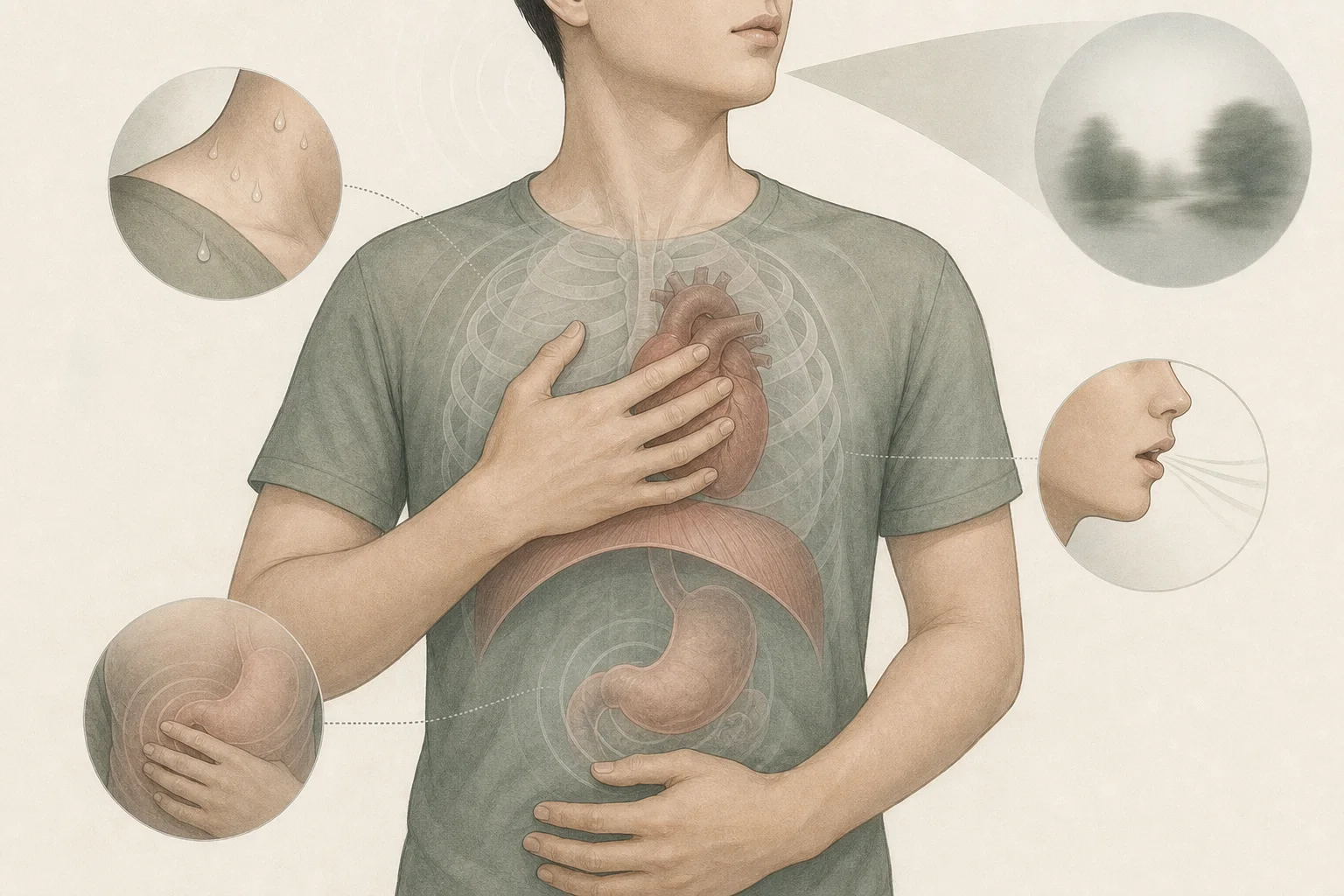
The physical symptoms felt during an attack are real. If new chest pain or fainting occurs, the causes related to the heart and respiratory system should be checked first.
Hyperthyroidism keeps the body running fast even outside of attacks
When thyroid hormones are excessive, the pulse may be fast even while resting, it may be difficult to tolerate heat, and hand tremors, sweating, weight loss, frequent bowel movements, and insomnia may follow. This is a pattern where the body remains heated throughout the day, rather than fear appearing suddenly only in specific places.
The presence of anxiety and panic does not rule out thyroid problems, nor does a change in thyroid levels explain all attacks. By looking at systemic changes that remain between attacks along with TSH and thyroid hormone tests, we determine if the two problems overlap.
For hypoglycemia, it is important whether it coincides with meals, exercise, or diabetes medication
When blood glucose drops, cold sweats, tremors, heart palpitations, hunger, and dizziness appear, and in severe cases, concentration may blur or confusion may occur. Whether it followed a long fast or intense exercise, or whether insulin or glucose-lowering medication is used, is an important context that differs from panic.
Hypoglycemia is not confirmed solely by the experience of feeling better after eating something sweet. The actual blood glucose level and the relationship with medication and meals must be verified when symptoms occur. If you begin eating sugar frequently to prevent recurring attacks, both the cause of blood glucose issues and the anticipatory anxiety of panic may become obscured.
Physical alarms that recur even after testing are specific targets for Korean medicine treatment
If attacks and anticipatory anxiety recur even after checking heart, thyroid, and blood glucose issues as necessary, Baekrokdam does not end with simply telling you to relax your mind. We use the following as branches for treatment: whether the solar plexus feels blocked before the heart rate rises, whether facial flushing and sweating come first, whether breathing becomes shallow and hands and feet become cold, and how much exhaustion and insomnia remain after an attack.
The focus of prescriptions differs depending on the pattern: 'Gi-ul' where the chest and throat feel blocked accompanied by sighing and indigestion; 'Dam-yeol' where heat and phlegm surge upward, overlapping with heart palpitations, nausea, and insomnia; and 'Sim-bi-yang-heo' where there is excessive worry, decreased appetite and energy, and the heart races even at small stimuli. Korean herbal medicine lowers these physical combinations, and acupuncture treatment releases tension in the chest, breathing, and throat to adjust the threshold at which attacks escalate.
Recovery is the process of reclaiming a daily life surrendered to fear, rather than just reducing the number of attacks
Even before attacks disappear completely, you may notice the peak intensity decreasing, the recovery time shortening, and a reduction in the exhaustion and brain fog that used to last until the next day. A sign that the treatment is working is when you no longer cancel appointments or immediately look for the nearest exit just because you experienced pulsating sensations.
If you are receiving existing mental health, cardiac, or endocrine treatments, please continue them as we divide the roles of care. Baekrokdam aims to maintain the improvements already seen in sleep, digestion, and heat sensations, while adjusting Korean herbal medicine and acupuncture treatments to address remaining anticipatory anxiety and physical alarms, so that you no longer have to shorten your day due to the possibility of an attack.
Panic disorder, arrhythmia, hyperthyroidism, and hypoglycemia cannot be distinguished by pulsating sensations and cold sweats alone. If attacks and anticipatory anxiety persist even after necessary examinations, we address the body's alarm system and the return to daily life through Korean herbal medicine and acupuncture, categorized by Qi stagnation, phlegm-heat, and deficiency of heart and spleen Yang.
Evidence and Update Information
This content was organized by Korean medicine doctor Choi Yeon-seung based on the materials below and was updated on 2026-08-31.
- NIMH: Anxiety DisordersBasic explanations of generalized anxiety, panic, social anxiety, and difficulties experienced in daily life
- WHO: Anxiety disordersPhysical, cognitive, and behavioral symptoms of anxiety disorders, daily difficulties, and the role of psychotherapy
- NIMH: Panic Disorder: What You Need to KnowPhysical symptoms of panic attacks, avoidance, and comorbid conditions
- NICE CG113: Generalised anxiety disorder and panic disorderStep-by-step evaluation of generalized anxiety and panic, and recommendations for psychological and pharmacological treatment
- NHLBI: Arrhythmia SymptomsArrhythmia symptoms such as pulsating sensations, chest pain, dizziness, and fainting, and situations requiring medical evaluation
- NIDDK: Graves' DiseaseRapid pulse, heat sensitivity, tremors, and changes in weight and bowel movements appearing in hyperthyroidism
- NIDDK: Low Blood GlucoseTremors, hunger, cold sweats, pulsating sensations, and confusion in hypoglycemia, and their relationship with medication, meals, and exercise
- PubMed: Acupuncture for Anxiety, systematic review and meta-analysisA comprehensive review of acupuncture research on anxiety, verifying both research heterogeneity and the scope of application