Sleep and the Body
If you experience heart palpitations when falling asleep, is it insomnia or panic?
If nighttime alarms persist even after checking the influence of the heart, thyroid, caffeine, and medications, we design herbal medicine treatment to simultaneously calm sleep, heart rate, breathing, and digestion.
If the heart beats strongly and breathing feels constricted the moment you try to fall asleep, anxiety over 'what if I can't sleep again' grows instantly. The focus differs between insomnia and panic depending on whether the palpitations come first or the worry comes first, and how many minutes it takes to peak.
| Scenario to Distinguish | Details to Record | Next Question |
|---|---|---|
| Initial changes | Start date, medication, illness, or events | Was there another cause first? |
| Long-term recurring discomfort | Frequency, recovery time, and avoided activities | What is the biggest obstacle in your daily life? |
| Changes during treatment or dosage reduction | Dosage changes, new symptoms, or function | Does the plan need to be adjusted? |
The speed at which pulsating sensations surge is the first clue
Nights where the heart gradually speeds up as worries continue are largely driven by anticipatory anxiety regarding sleep and hyperarousalother factors. Conversely, if your heart suddenly races, you experience shortness of breath, and a surge of terror, feeling as if you might die, hits within a few minutes without any particular thought, we examine the patterns of nocturnal panic.
These two cases can overlap. After one major shock, the body may sound an alarm at even a small change in heart rate near bedtime, which in turn leads to avoiding sleep. Rather than diagnosing yourself, you can find the focus of treatment by distinguishing the first signal, the speed to the peak, and whether similar attacks occur during the day.
First, we rule out the influence of the heart, thyroid, caffeine, and medications
Pulsating sensations that occur irregularly even while resting, or are accompanied by chest pain and a feeling of fainting during exercise, are not viewed as anxiety alone. Changes in thyroid function, anemia, arrhythmia, and changes around menopause can also destabilize nocturnal heart rate and heat sensations.
We also check the timing of afternoon coffee, energy drinks, nasal decongestants, certain weight control agents, and the start, increase, or decrease of psychiatric medications. This does not mean you should stop everything, but knowing the timing before and after the pulsating sensations began ensures that necessary tests are not missed and that the roles of existing treatments and Korean herbal medicine are safely divided.
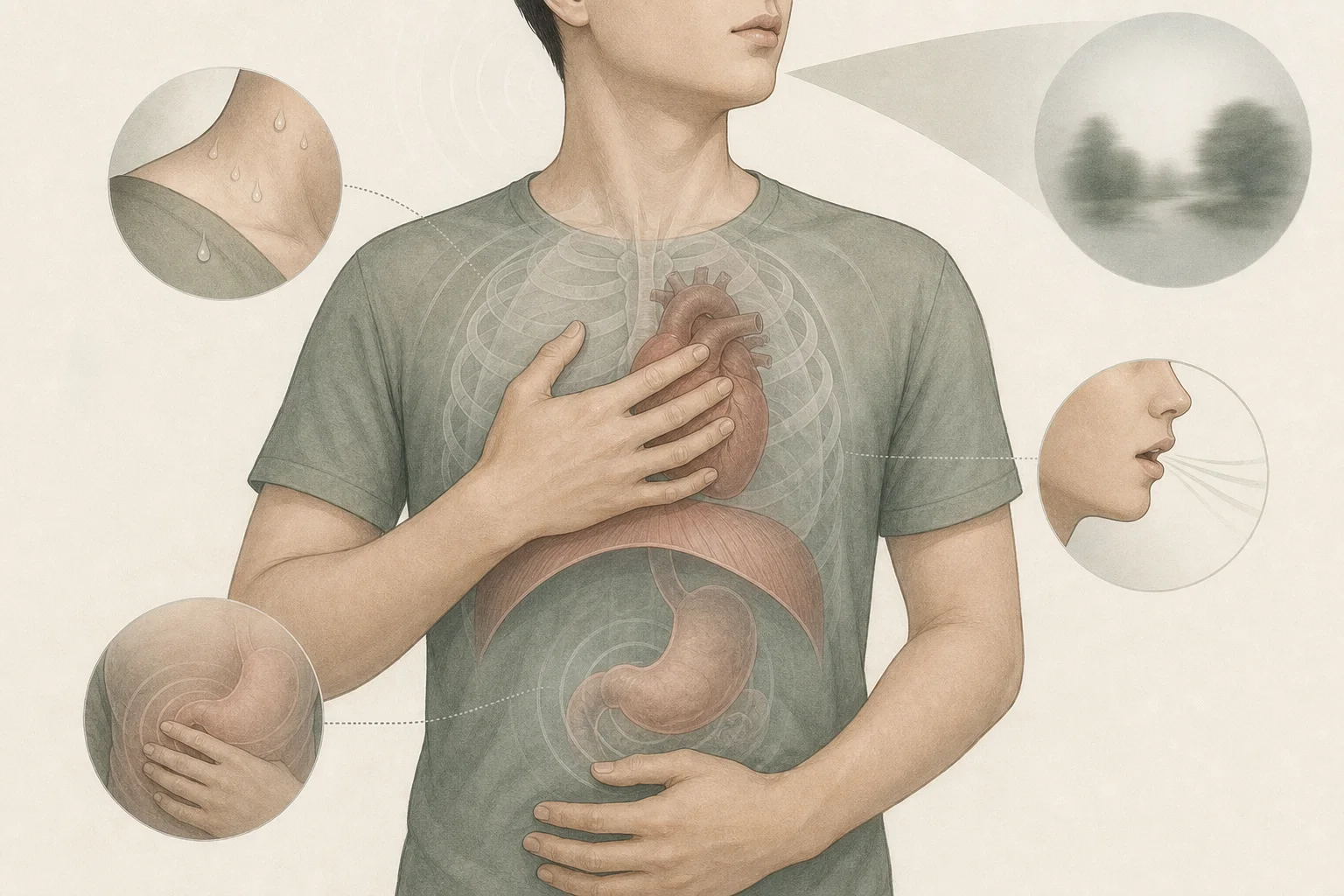
The physical symptoms felt during an attack are real. If new chest pain or fainting occurs, the causes related to the heart and respiratory system should be checked first.
You must break the cycle of becoming more anxious the more you check your heart
If you constantly measure your pulse or place your hand on your chest before falling asleep, even small changes feel significant. Even if the numbers drop briefly, the relief does not last long, and the body remains more awake while waiting for them to rise again. Once the necessary cardiac evaluations are complete, it is worth reflecting on whether daily repeated checking helps recovery.
When an attack surges, instead of inhaling deeply and heavily, keep your lips lightly closed and make your exhalations long. Reclaim the signal that your body is currently in bed by feeling the sensations of your soles and back touching the surface. Rather than struggling to eliminate the pulsating sensation immediately, creating space for the wave to pass helps lower the alarm.
Korean herbal medicine treats the nocturnal alarm system rather than just a single heart rate value
The way the body remains awake differs for those who experience heat rising to the face and dry mouth along with pulsating sensations, those who feel a blockage in the solar plexus with increased burping and shortness of breath, and those with prominent cold sweats and decreased energy. Baekrokdam distinguishes whether heat, phlegm-fluid (dam-eum), deficiency of qi and blood, or tension in the chest is maintaining the alarm, rather than simply lowering the heart rate value.
Korean herbal medicine treatment is designed so that heart rate and breathing descend smoothly before sleep, the peak of attacks is lowered, and the strength to return to sleep after waking is built. Acupuncture can be used in parallel to release tension in the neck, ribcage, and solar plexus, lowering the cycle where shallow breathing and pulsating sensations amplify each other.
If you are taking anti-anxiety medication, sleeping pills, or antidepressants, do not stop them suddenly. Even during Korean herbal medicine treatment, we monitor changes in the body while coordinating a reduction plan with your prescribing medical provider.
Recovery is seen not in the heart rate numbers, but in no longer fearing sleep
Improvement does not mean that pulsating sensations must disappear entirely. The nocturnal alarm is weakening if, even when the heart races, the terror does not surge to the peak, you stop repeatedly checking your pulse, and the number of days you can lie back down or fall asleep within a short time increases.
The treatment goal extends from before sleep until the next day. We adjust the Korean herbal medicine prescription and lifestyle modifications by observing whether nocturnal pulsating sensations decrease, morning fatigue and solar plexus tightness lighten, and the speed of returning to your original rhythm after a late schedule or stress increases.
Pulsating sensations near bedtime are first analyzed by the order and speed of the surge, and the influence of the heart, thyroid, caffeine, and medications. Korean herbal medicine treatment focuses on lowering the nocturnal alarm and recovering the strength to fall back asleep, rather than a single heart rate number.
Evidence and Update Information
This content was organized by Korean medicine doctor Choi Yeon-seung based on the materials below and was updated on 2026-08-31.
- NIMH: Anxiety DisordersBasic explanations of generalized anxiety, panic, social anxiety, and difficulties experienced in daily life
- WHO: Anxiety disordersPhysical, cognitive, and behavioral symptoms of anxiety disorders, daily difficulties, and the role of psychotherapy
- NIMH: Panic Disorder: What You Need to KnowPhysical symptoms of panic attacks, avoidance, and comorbid conditions
- NICE CG113: Generalised anxiety disorder and panic disorderStep-by-step evaluation of generalized anxiety and panic, and recommendations for psychological and pharmacological treatment
- NICE CG159: Social anxiety disorderEvaluation of social anxiety and treatment principles centered on cognitive behavioral therapy
- VA/DoD 2025: Chronic Insomnia Disorder and Obstructive Sleep ApneaAssessment and treatment of chronic insomnia and sleep apnea, and the CBT-I priority principle
- PubMed: Acupuncture for Anxiety, systematic review and meta-analysisA comprehensive review of acupuncture research for anxiety, including verification of research heterogeneity and application limits
- NICE NG215: Medicines associated with dependence or withdrawal symptomsGradual reduction of benzodiazepines, Z-drugs, antidepressants, etc., and principles of individual pacing and continuous observation
- NIMH: DepressionEmotional, cognitive, and physical symptoms of depression and when to seek help