Chronic Insomnia: Read in the order of your curiosity
Before the diagnosis alone explains all of your current difficulties
Chronic Insomnia: We check bed-time tension and daytime functioning as much as the time spent asleep
Insomniais a state where one has the opportunity to sleep but finds it difficult to fall asleep, wakes up frequently, or wakes up too early, causing instability in concentration, mood, and work the next day. We record not only the sleep onset time but also nighttime awakenings, final wake-up time, daytime sleepiness, and fatigue. The goal is to reduce the time spent enduring while checking the clock and to restore a consistent wake-up time and daytime concentration. If you experience loud snoring/apnea, drowsy driving, euphoria where you do not feel tired despite lack of sleep, or thoughts of self-harm, please seek the relevant medical evaluation first.
Determine next steps
Chronic Insomnia: Symptoms to check now and the order of medical evaluation
Rather than looking at total sleep time alone, we determine the treatment order by comparing sleep onset latency, nighttime awakenings, and the following day's daily life.
| Current Situation | Items to Check Together | Next action |
|---|---|---|
| First occurrence, cause is unclear | Physical illnesses, medications, changes in sleep | Start with necessary evaluations |
| Long-term repetition, reduction in daily activities | Avoided activities, recovery time, response to treatment | Integrated care plan |
| Physical burden remains during existing treatment | Sleep, heart rate, digestion, energy levels | Consultation on concurrent treatment goals |
| Symptoms that suddenly worsen or require immediate assistance | If you experience loud snoring/apnea, drowsy driving, euphoria where you do not feel tired despite lack of sleep, or thoughts of self-harm, please seek the relevant medical evaluation first. | Seek the relevant medical care immediately |
When to seek medical evaluation first
Do not wait; seek medical evaluation first for these symptoms
Even for familiar symptoms, if the following changes occur, prioritize the relevant medical evaluation over making inquiries.
- If you experience loud snoring/apnea, drowsy driving, euphoria where you do not feel tired despite lack of sleep, or thoughts of self-harm, please seek the relevant medical evaluation first.
- Thoughts of self-harm or harming others, or specific plans to do so
- Seizures, changes in consciousness, hallucinations, or impaired reality judgment
- Inability to eat or drink, or a state where it is difficult to maintain safety while driving or working
Rather than the name of the disease, we look at the patient's daily life
Nights where you feel more awake upon lying in bed, or toss and turn until morning after waking up and checking the clock
We first distinguish the effects of sleep apnea, restless legs syndrome, mood disorders, and medications. When insomnia persists after this evaluation, Korean herbal medicine treatment focuses on resolving tension, digestion, and body heat that remain unresolved at night, as well as recovery for the next day, rather than simply forcing sleep. Pattern Identificationis performed.
In some cases, the more you struggle to force yourself to sleep, the more tense you become in bed.
We use a sleep diary to see how lying down early, oversleeping, napping, checking the clock, and the use of sleeping pills interact with nighttime anxiety.
Even for the same insomnia, the reasons why the body remains awake differ.
We prescribe treatment by examining which factors actually change along with sleep, such as throbbing after worry, nighttime heat sensations, chest tightness, or decreased appetite and energy.
We check whether your mornings and days are returning to normal, rather than just the time you fell asleep.
Along with nighttime awakenings and the ability to fall back asleep, we verify if there are actual improvements in consistent wake-up times, morning concentration, and safety while driving or working.
Treatment GoalsWe aim to reduce the time spent enduring the night while checking the clock and restore a consistent wake-up time and daytime concentration.
Consult about insomnia progress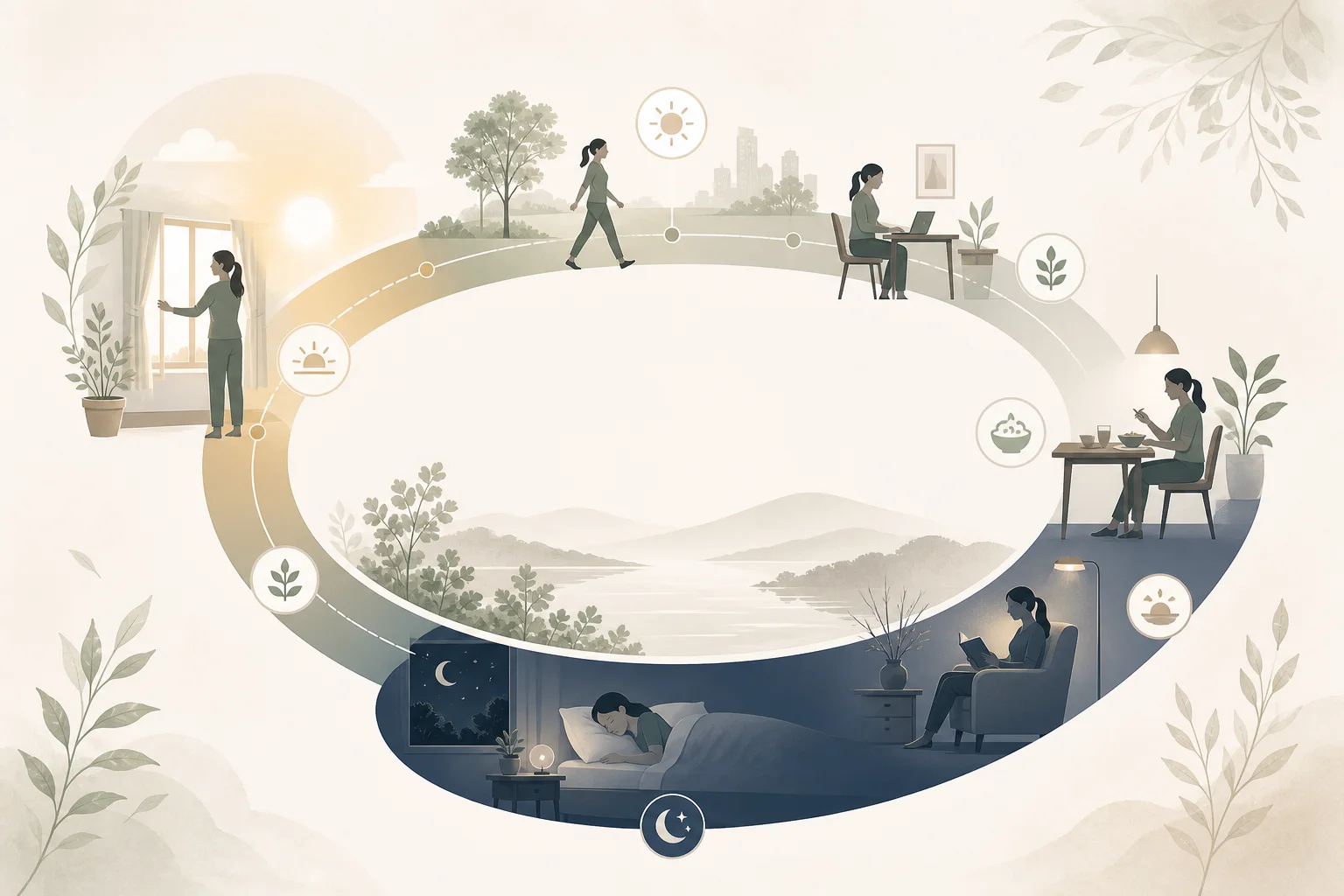
Rather than forcing yourself to lie down early, we adjust the wake-up time and the reference points for light, meals, and activity together.
The photos show daily scenarios where concerns regarding sleep, anxiety, mood, and medication appear, and the explanatory illustrations show a simplified process of excessive body tension and recording methods. These do not represent an individual's diagnosis or treatment results.If you have these experiences
Nights where you feel wide awake the moment you lie in bed, or toss and turn until morning after waking up and checking the clock
Even after practicing sleep hygiene and trying medications, you may find yourself worrying about sleep the moment you hit the bed and repeating a cycle of just enduring the next day. In such cases, we must look at the tension that remains unresolved at night and daytime recovery, rather than focusing solely on the time it takes to fall asleep.
For those who feel tension before falling asleep, thinking, "What if I can't sleep again tonight?"
Cases where tension begins before falling asleep, thinking, "What if I can't sleep again tonight?"
For those who sleep when taking medication but continue to experience morning grogginess and decreased daytime concentration
Cases where you sleep when taking medication but continue to experience morning grogginess and decreased daytime concentration
For those who experience frequent awakenings along with recurring throbbing, heat sensations, stomach discomfort, or decreased energy
Cases where frequent awakenings occur along with recurring throbbing, heat sensations, stomach discomfort, or decreased energy
This is how we evaluate during medical evaluation
Chronic Insomnia: Current Difficulties Remaining After Diagnosis
Insomnia is a state where it is difficult to fall asleep, or you wake up frequently or too early despite having the opportunity to sleep, leading to instability in concentration, mood, and work the following day. We record not only the time it takes to fall asleep but also nighttime awakenings, final wake-up time, daytime sleepiness, and fatigue. We aim to reduce the time spent enduring while checking the clock and restore a consistent wake-up time and daytime concentration. For loud snoring, sleep apnea, drowsy driving, euphoria where you do not feel tired despite lack of sleep, or thoughts of self-harm, please seek the relevant medical evaluation first.
In some cases, the more you struggle to force sleep, the more tense you become at bedtime.
We examine how habits such as lying down early, oversleeping, napping, checking the clock, and using sleeping pills intertwine with nighttime anxiety sleep diaryas a perspective.
Even for the same insomnia, the reasons why the body remains awake differ
We prescribe treatment by examining which of the following actually change along with sleep: throbbing after worrying, nighttime heat sensations, chest tightness, or decreased appetite and energy.
We check whether your mornings and days improve, rather than just the time you fell asleep
nighttime awakening· We verify if there are actual improvements in falling back asleep, maintaining a consistent wake-up time, morning concentration, and safety while driving or working.
Reasons why recovery may be slow
Chronic Insomnia: Reasons Why It Persists
Sleep apnea ·Restless legs·We first distinguish the influence of mood disorders and medications. If insomnia persists after that evaluation, Korean herbal medicine treatment focuses on diagnosing patterns of tension, digestion, and body heat that remain unresolved at night, as well as the next day's recovery, rather than simply aiming to force sleep.
Identify when the symptoms began
List the date the symptoms first appeared and any preceding changes in medication, illness, work, or relationships in chronological order.
Select the most challenging daily life scenarios
Choose one or two activities among sleep, commuting, travel, meals, or conversation that you have actually given up or been delayed in.
Verify recovery time
Record whether symptoms persist for several minutes, hours, or until the next day after they arise to quantify the burden of repetition.
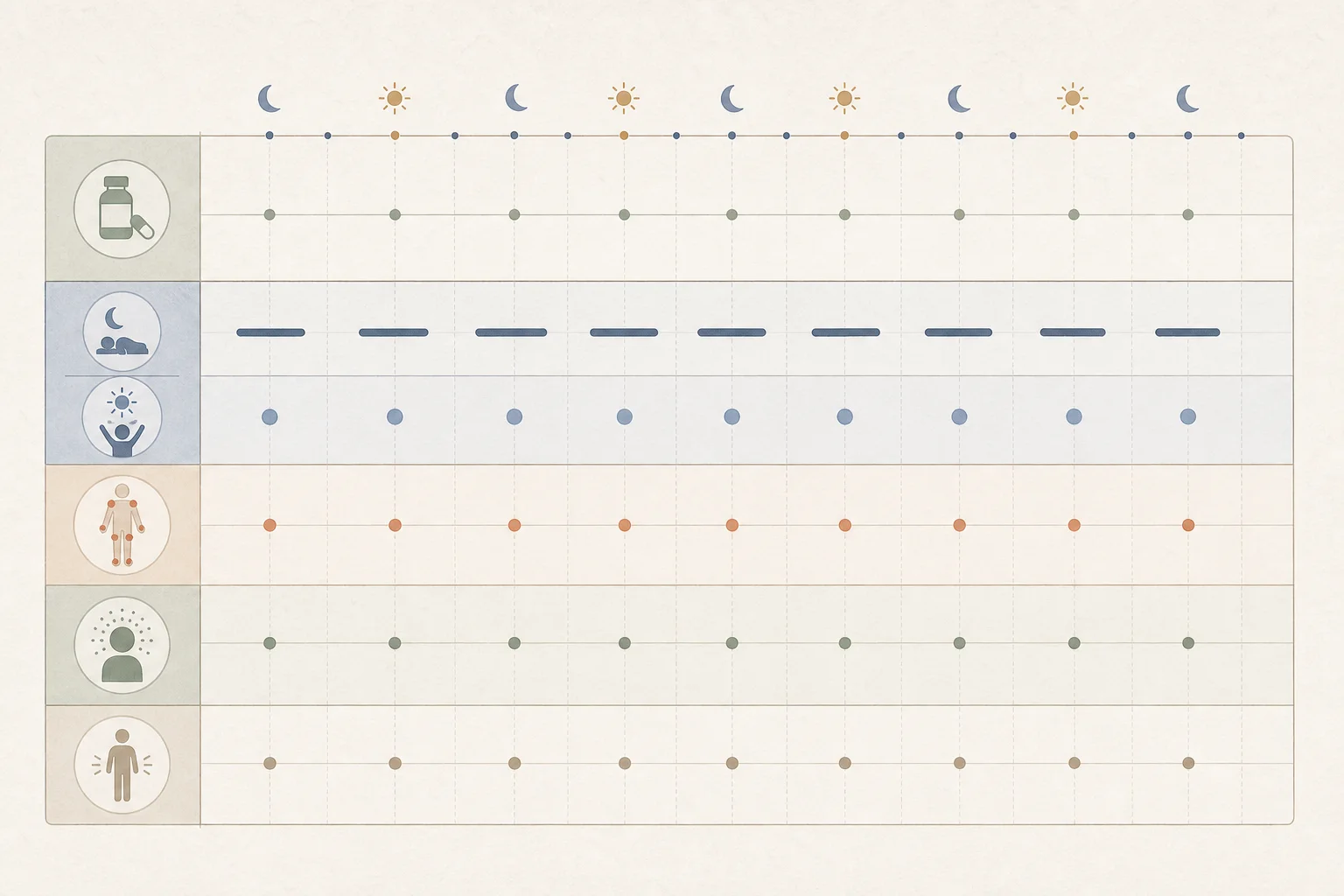
The prescriber determines the reduction schedule, and the log is used as a reference for discussion to distinguish between rebound effects, withdrawal, and recurrence of original symptoms.
Tests and daily records
Where current treatment and lifestyle records meet
Please keep a sleep diary and record any next-day grogginess or changes in concentration.
First, we examine risks and other causes that must be checked
If you experience loud snoring, sleep apnea, drowsy driving, agitation where you do not feel tired despite a lack of sleep, or thoughts of self-harm, please seek the appropriate medical care first.
Distinguishing between initial symptoms and long-lasting symptoms
Record the time you went to bed, the actual time you fell asleep, times of nighttime awakening or waking up, and next-day sleepiness in your sleep diary.
Checking physical conditions that change together on the same day
Only the symptoms and patterns that repeatedly change together among chills/heat, sweating, appetite, bowel movements, dreams, and energy levels are reflected in the prescription.
Pattern Identification for Chronic Insomnia with Korean Herbal Medicine
Four Changes Observed in Korean Herbal Medicine Treatment for Chronic Insomnia
In insomnia, Sleep onset latency·We distinguish whether nighttime awakening or early morning awakening is the primary issue. Changes in heart rate, digestion, and body heat occurring during the same period are reflected in the Korean herbal medicine prescription.
When worries persist, awakenings are frequent, and you feel exhausted until morning
We observe whether you wake up frequently and have many dreams rather than having trouble falling asleep, and if morning fatigue persists. We ask if decreased appetite, bloating, palpitations, or being easily startled fluctuate along with the depth of sleep. The goal is the simultaneous recovery of nighttime awakenings, daytime energy, and digestion, rather than focusing on sleep duration alone.
When the body is exhausted, but heat in the head and upper body does not subside
We observe whether there is a contrast between early morning awakening, dry mouth, heat sensations in the chest, and coldness in the hands and feet. We check the timing of menopause, overwork, or night sweats coinciding with shallow sleep. We track the reduction of nighttime heat and sensitive awakenings along with the feeling of recovery the next day.
When daytime tension leads to nighttime racing thoughts and irritability
We observe whether thoughts of work or conflict accelerate upon lying down and if the act of going to bed itself becomes anxiety-inducing. We ask if chest tightness, sighing, neck and shoulder tension, or headaches increase following stress. Rather than aiming to force sleep, the goal is to widen the range in which evening alertness and tension responses subside.
Changes to monitor during treatment
Returning to daily life before focusing on the number of symptoms
Reduce the time spent enduring while checking the clock, and restore a consistent wake-up time and daytime concentration.
We use the sleep diary to see how lying down early, oversleeping, napping, checking the clock, and the use of sleeping pills correlate with nighttime anxiety.
In the first consultation, these criteria serve as the current starting point. Reduce the time spent enduring while checking the clock, and restore a consistent wake-up time and daytime concentration.
Current diagnosis, testing, and psychotherapy stage, and a complete medication list including prescription drugs, over-the-counter drugs, and supplements
Treatment priorities are adjusted by comparing changes over several days rather than a single good day. Reduce the time spent enduring while checking the clock, and restore a consistent wake-up time and daytime concentration.
We prescribe treatment by examining which symptoms, such as throbbing after worrying, nighttime heat sensations, chest tightness, or decreased appetite and energy, actually change in conjunction with your sleep.
The direction of subsequent care is determined based on the lifestyle the patient wishes to return to. We aim to reduce the time spent staring at the clock and recover a consistent wake-up time and daytime focus.
At the crossroads of sleep, tension, digestion, and energy
Four changes observed in herbal medicine treatment for chronic insomnia
Among sleep onset latency, nighttime awakenings, andearly awakening we identify which is the primary issue. Changes occurring simultaneously in heart rate, digestion, and body heat are reflected in the herbal medicine prescription.
Pattern identification (Byeonjeung) is not about assigning a constitution name to insomnia, anxiety, or depression. While maintaining the mental health diagnosis, psychotherapy, and the prescriber's medication plan, we select the axis that actually moves together among sleep, heart rate, digestion, body heat, and energy to adjust the priority of the Korean herbal medicine prescription.
When worrying is prolonged, awakenings are frequent, and exhaustion lasts until morning
- Changes to monitor in sleep and the body
- We check if you wake up frequently rather than having trouble falling asleep, if you have many dreams, and if morning fatigue persists.
- Changes to monitor in the body
- We ask if decreased appetite, bloating, throbbing, or being easily startled fluctuate along with the depth of your sleep.
- Prescription priorities
- Rather than focusing solely on sleep duration, we aim for the simultaneous recovery of nighttime awakenings, daytime energy, and digestion.
When the body is exhausted, but heat in the head and upper body does not subside
- Changes to monitor in sleep and the body
- We check for a contrast between dawn awakenings, dry mouth, and chest heat sensations versus coldness in the hands and feet.
- Changes to monitor in the body
- We simultaneously verify the timing of menopause, overwork, night sweats, and the onset of shallow sleep.
- Prescription priorities
- We track the reduction of nighttime heat sensations and sensitive awakenings alongside the feeling of recovery the following day.
When daytime tension leads to racing thoughts and irritability at night
- Changes to monitor in sleep and the body
- We check if thoughts of work or conflict accelerate upon lying down and if the bed itself becomes a source of anxiety.
- Changes to monitor in the body
- We ask if chest tightness, sighing, neck and shoulder tension, and headaches increase together following stress.
- Prescription priorities
- Rather than aiming to force sleep, we focus on widening the range in which evening arousal and tension responses are deactivated.
When you feel internal blockage, have frequent dreams, and experience shallow sleep
- Changes to monitor in sleep and the body
- We check if chest tightness in the solar plexus, vivid dreams, and early morning awakening overlap after late-night snacks or alcohol consumption.
- Changes to monitor in the body
- We also check for nausea, a sticky feeling in the mouth, a heavy head, and the sedative effects of any medications you are taking.
- Prescription priorities
- We aim to simultaneously reduce gastrointestinal burden and nighttime arousal, while maintaining a separate evaluation for sleep disorders.
Order of prescription adjustment
- First, we examine risks and other causes that must be checked
Please seek the appropriate medical evaluation first if you experience loud snoring, sleep apnea, drowsiness while driving, agitation where you do not feel tired despite lack of sleep, or thoughts of self-harm.
- Distinguish between initial symptoms and long-lasting symptoms
Record the time you went to bed, the actual time you fell asleep, nighttime awakenings, the time you woke up, and next-day drowsiness in a sleep diary.
- We check for changes in your physical condition that occur together on the same day.
Only the symptoms and patterns that repeatedly change together among chills/heat, sweating, appetite, bowel movements, dreams, and energy levels are reflected in the prescription.
- When adjusting for daily functioning and combination safety
We simultaneously check for recovery in commuting, mobility, sleep, and eating, as well as drowsiness, dizziness, gastrointestinal reactions, and changes in medications.
Why consider Korean herbal medicine treatment now?
- Cases where tension begins even before going to bed, such as thinking, "What if I can't sleep again tonight?"
- Cases where you sleep after taking medication, but morning grogginess and decreased daytime concentration persist
- Cases where frequent awakenings are accompanied by recurring palpitations, heat sensations, digestive discomfort, or decreased energy
What is evaluated in Korean herbal medicine treatment for this condition
- We use a sleep diary to see how lying down early, oversleeping, napping, checking the clock, and the use of sleeping pills correlate with nighttime anxiety.
- Current diagnosis, test results, stage of psychotherapy, and a complete medication list including prescriptions, over-the-counter drugs, and supplements
- We prescribe treatment by examining which of the following actually change along with sleep: palpitations after worrying, nighttime heat sensations, chest tightness in the solar plexus, or decreased appetite and energy.
Dividing sleep onset, maintenance, and early awakening
Record the total sleep opportunity, time taken to fall asleep, nighttime awakenings and the time to fall back asleep, and the final wake-up time in the same sleep diary.
First, we check the influence of respiration, mood, and medications
We check for snoring, sleep apnea, leg discomfort, pain, nocturia, medications, decreased need for sleep, agitation, and impulsivity.
Tracking drowsiness, concentration, work, and driving
Rather than just seeing if the time to fall asleep has decreased, we look at whether morning freshness and the next day's concentration, interview performance, meetings, relationships, and driving functions are actually restored.
Things to prepare before the consultationIn your sleep diary, please record the time of sleep onset, the number and duration of awakenings, final wake-up time, daytime drowsiness, impact on work and driving, snoring, sleep apnea, mood, and medications.
Crisis intervention, CBT, ERP, trauma therapy, sleep studies, and the prescriber's dose reduction plan proceed in the necessary order. Korean herbal medicine treatment works alongside that plan to specifically target the remaining physical burdens, such as sleep, palpitations, digestion, and tension.
Consult about insomnia progressSleep and Mind Glossary
Additional information to know regarding chronic insomnia
You can check the brief meaning first and then proceed to the detailed explanation.Frequently Asked Questions
Frequently Asked Questions About Chronic Insomnia
If I sleep but still feel heavy in the morning, what else should be evaluated during insomnia treatment?
Even after practicing sleep hygiene and trying medications, some people find themselves worrying about sleep the moment they lie down, repeating a cycle of just enduring the next day. In such cases, we must look beyond just the time it takes to fall asleep and examine the tension that persists through the night and the level of recovery during the day. We use a sleep diary to see how habits, such as lying down early, oversleeping, napping, checking the clock, and using sleeping pills, interact with nighttime anxiety.
How should I keep a sleep diary before an insomnia consultation?
Before the consultation, we use a sleep diary to see how lying down early, oversleeping, napping, checking the clock, and using sleeping pills interact with nighttime anxiety. Please organize the following information chronologically: your current stage of diagnosis, testing, and psychotherapy; a complete list of medications including prescriptions, over-the-counter drugs, and supplements; and which of the following actually change in conjunction with your sleep: throbbing after worrying, nighttime heat sensations, chest tightness (epigastric discomfort), or decreased appetite and energy. This helps establish a starting point for treatment. We first check for sleep onset, nighttime awakenings, early morning awakenings, snoring, sleep apnea, leg discomfort, mood changes, and all medications. Then, through a Korean medicine examination, we narrow down the combination of sleep, heart rate, digestion, body heat, and energy to explain the treatment goals.
When should Korean herbal medicine treatment be considered for chronic insomnia?
We first distinguish the effects of sleep apnea, restless legs, mood disorders, and current medications. If insomnia persists after this evaluation, Korean herbal medicine treatment focuses on diagnosing the patterns of persistent nighttime tension, digestion, and body heat, as well as the next day's recovery, rather than simply forcing sleep.
What factors determine the specific Korean herbal medicine prescription for chronic insomnia?
Prescriptions are based on which of the following actually change in conjunction with sleep: throbbing after worrying, nighttime heat sensations, chest tightness, or decreased appetite and energy. We distinguish between the time it takes to fall asleep, nighttime awakenings, waking up too early, and next-day drowsiness. The direction of the Korean herbal medicine prescription is determined by selecting which of the following change during the same period: respiration, leg sensation, heart rate, or digestion.
Can I receive this along with treatment from a psychiatry clinic?
If insomnia persists, we check for snoring, restless legs syndrome, mood issues, and current medications. In Korean herbal medicine treatment, we first set a target for improvement among sleep onset time, nighttime awakenings, or next-day functioning.
Can I reduce my current medications while taking herbal medicine?
If you are taking sleeping pills or other mental health medications, do not reduce the dose or skip them on your own. The decision and pace of dose reduction are determined by the prescribing physician; the Korean medicine clinic records your sleep and next-day physical condition to support integrated care.
What changes would make other medical evaluations a priority over counseling?
Please seek the appropriate specialized medical care first if you experience heavy snoring, sleep apnea, drowsy driving, hypomania (feeling wired and not tired despite lack of sleep), or thoughts of self-harm.
Evidence and Update Information
This content was compiled by Korean medicine doctor Choi Yeon-seung based on the official professional materials and disease-specific clinical data below, and was updated on 2026-08-26.
- VA/DoD 2025: Chronic Insomnia Disorder and Obstructive Sleep ApneaAssessment and treatment of chronic insomnia and sleep apnea, and the CBT-I priority principle
- NHLBI: Circadian Rhythm DisordersPatterns and evaluation of misaligned sleep-wake cycles
- NINDS: Restless Legs SyndromeLeg discomfort that worsens at night and improves with movement, related diseases, and medical evaluation
- NICE NG215: Medicines associated with dependence or withdrawal symptomsGradual reduction of benzodiazepines, Z-drugs, antidepressants, etc., and principles of individual pacing and continuous observation
- FDA: Boxed warning for prescription insomnia medicinesComplex sleep behaviors and risk of injury associated with certain insomnia medications such as Zolpidem
- PubMed: Acupuncture for chronic insomnia disorder, 2025 systematic reviewReviews reporting improvements in subjective sleep indicators alongside the limitations of objective indicators and sample sizes
- Dongui Bogam, Naegyeong-pyeon Volume 2: Original text comparison data for Dreams and Insomnia due to Deficiency-Heat (虛煩不睡)Publicly available facsimile of original texts for verifying sections and contexts of traditional literature related to insomnia
- NIMH: Anxiety DisordersBasic explanations of generalized anxiety, panic, social anxiety, and difficulties experienced in daily life