Sleep Differentiation
Insomnia and sleep deprivation due to lack of time are different
While both cause daytime sleepiness and decreased concentration, the starting point of treatment differs depending on whether recovery occurs when sleep time is increased and how the body becomes aroused after lying in bed.
Insomniais a state where it is difficult to fall or stay asleep despite having enough time to sleep, whereas sleep deprivation is a state where the opportunity to sleep itself is insufficient due to work, childcare, or lifestyle rhythms.
| Condition to Distinguish | Nighttime Patterns | Daytime Patterns |
|---|---|---|
| Insomnia | Have time to sleep but cannot fall asleep or wake up frequently | Feel tired but struggle to nap and become irritable |
| Sleep Deprivation | Bedtime is continuously pushed back or the wake-up time is too early | Fall asleep easily and catch up on sleep whenever the opportunity arises |
| Sleep Rhythm Issue | Fall asleep much later than the desired time | Feel relatively refreshed when going to bed late and waking up late |
| Other sleep disorders | Sleep interrupted by snoring, apnea, or leg discomfort | Feeling sleepy even after sufficient sleep or lingering morning headaches |
The first step is determining if you had enough time to sleep
If your actual sleep time was only five hours due to overtime work, childcare, or late smartphone use, you must first sleep deprivationresolve that issue. Conversely, if you can lie down for more than seven hours but take a long time to fall asleep, wake up frequently, or wake up too early, it is closer to the pattern of insomnia.
Whether daytime sleepiness quickly resolves after getting sufficient sleep two or three times over a weekend or vacation is also a clue. Sleep deprivation tends to recover when opportunities for sleep increase, but with insomnia, tension and arousal regarding sleep often remain even when time becomes available.
With insomnia, the body does not settle into sleep despite being tired
When insomnia persists, the bed easily becomes a place where tension begins, thinking 'What if I can't sleep again today?', rather than a place for rest. While the body is exhausted, thoughts race, the heart beats fast, heat rises, and you wake up at the slightest sound, hyperarousalwhich follows. The point where this differs from sleep deprivation is the state of being extremely tired during the day but unable to fall asleep once lying down.
Treatment goals vary depending on whether it is difficult to fall asleep, frequent waking, or waking up too early in the dawn. Even if all three patterns coexist, we must identify what interrupts sleep first among nighttime throbbing, dreams, night sweats, pain, or digestive discomfort.
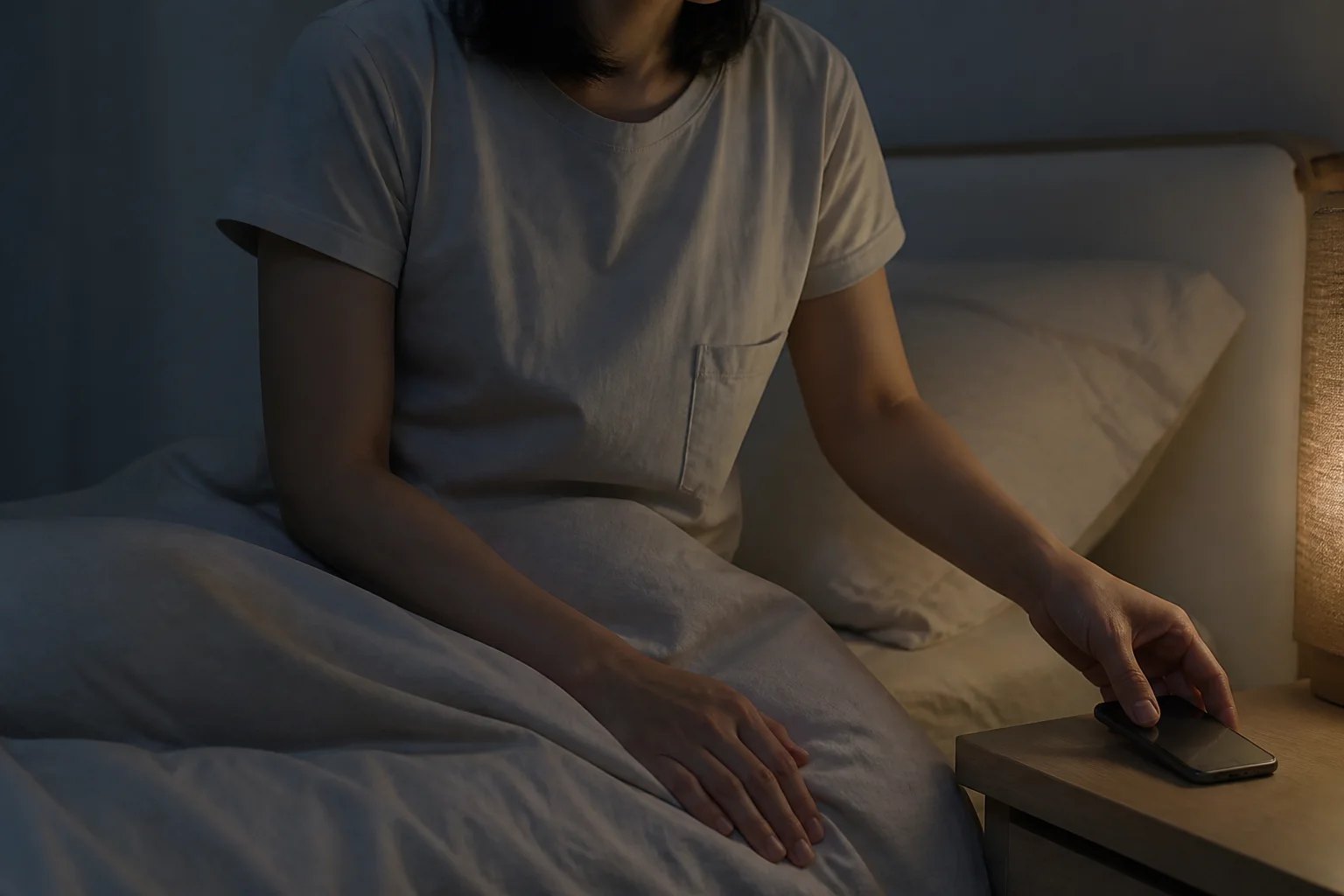
Rather than just the time spent unable to sleep, record the act of checking the clock, anxiety in bed, and the following day's functioning.
If you still do not feel refreshed despite increasing sleep, we look for other sleep problems
If morning headaches, dry mouth, and severe daytime sleepiness persist despite sufficient sleep, and there is snoring and apnea, it is necessary to check for sleep apnea. If it is difficult to keep your legs still at night and you feel better when moving them, Restless Legs Syndromethis can interrupt sleep. In cases where you cannot fall asleep at the desired time but sleep well when going to bed late and waking up late, it may be an issue of a shifted circadian rhythm.
If all these states are grouped as insomnia and only the sleeping pills are changed, the root cause remains. We also examine how caffeine, alcohol, steroids, stimulants, or currently prescribed mental health medications affect sleep alongside the current treatment.
Korean medicine treatment also lowers the body's flow that creates nighttime arousal
At Baekrokdam, we do not stop at simply increasing the time spent asleep. We analyze whether thoughts and worries do not stop, whether heart throbbing and a sensation of heat rising occur together, whether sleep is interrupted by blocked digestion and stomach discomfort, or whether recovery is slow from small stimuli due to depleted energy. Even for the same insomnia, the Korean herbal medicine prescription differs for someone whose arousal is caused by phlegm-heat and stagnation versus someone who experiences nighttime heat due to a deficiency of blood and yin.
Acupuncture treatment focuses on lowering tension concentrated in the head and chest and restoring the rhythm that transitions into sleep. Korean herbal medicine treatment focuses on creating the conditions for the body to settle down at night by regulating accompanying symptoms that hold back sleep, such as throbbing, heat sensations, digestion, and energy, rather than forcing sleep with medication.
If it is sleep deprivation, create time; if it is insomnia, reduce tension in bed
For sleep deprivation, the priority is to secure actual sleep opportunities by gradually moving bedtime earlier without significantly disrupting the wake-up time. For insomnia, since trying to catch sleep by lying down for a long time can increase arousal, it is better to lie down only when sleepy and rebuild nighttime sleep pressure through morning sunlight and daytime activity. Late afternoon caffeine and alcohol used to fall asleep can both further fragment sleep.
Recovery is not measured simply by 'how many hours you slept.' We also look at whether the effort to fall asleep has decreased, whether you can fall back asleep after waking up at night, whether the morning throbbing and heaviness have lightened, and whether your reliance on caffeine and naps to get through the day has decreased.
Once the distinction is clear, the order of treatment becomes evident
For those who lack the opportunity to sleep, securing sleep time within their daily structure must come before herbal medicine. Conversely, if insomnia persists despite having sufficient time, and is intertwined with sensations of heat, throbbing, digestive discomfort, and anxiety, the body's cycle of arousal can be the target of treatment.
If sleep apnea, restless legs syndrome, depression, anxiety, pain, or the effects of medication are suspected, necessary tests and existing treatments are conducted in parallel. Korean medicine treatment does not replace that process; rather, it serves as a pillar for regaining natural sleep by addressing the symptoms that continue to wake you and your overall recovery capacity.
Distinguishing whether you cannot sleep because of a lack of time, or whether your body cannot settle into sleep despite having enough time, changes the order of lifestyle adjustments and Korean medicine treatment.
Evidence and Update Information
This content was organized by Korean medicine doctor Choi Yeon-seung based on the materials below and was updated on 2026-08-31.
- VA/DoD 2025: Chronic Insomnia Disorder and Obstructive Sleep ApneaAssessment and treatment of chronic insomnia and sleep apnea, and the CBT-I priority principle
- NHLBI: Circadian Rhythm DisordersPatterns and evaluation of misaligned sleep-wake cycles
- NINDS: Restless Legs SyndromeLeg discomfort that worsens at night and improves with movement, related diseases, and medical evaluation
- NICE NG215: Medicines associated with dependence or withdrawal symptomsGradual reduction of benzodiazepines, Z-drugs, antidepressants, etc., and principles of individual pacing and continuous observation
- FDA: Boxed warning for prescription insomnia medicinesComplex sleep behaviors and risk of injury associated with certain insomnia medications such as Zolpidem
- PubMed: Acupuncture for chronic insomnia disorder, 2025 systematic reviewReviews reporting improvements in subjective sleep indicators alongside the limitations of objective indicators and sample sizes
- Dongui Bogam Naegyeong-pyeon Volume 2: Original text comparison data for Dreams and Insomnia due to Deficiency-Heat (夢·虛煩不睡)Publicly available facsimile of original texts for verifying sections and contexts of traditional literature related to insomnia
- NIMH: Anxiety DisordersBasic explanations of generalized anxiety, panic, social anxiety, and difficulties experienced in daily life