Sleep Differentiation
What is the difference between difficulty falling asleep, waking up frequently, and waking up too early?
Rather than simply trying to increase sleep duration, we determine the sequence of herbal medicine treatment and sleep recovery by observing differences in heart palpitations, heat sensations, digestion, and energy levels that accompany difficulty falling asleep, sleep maintenance, or early awakening.
Even within insomnia, the reasons the body remains awake differ depending on whether it takes a long time to fall asleep, whether you wake up every two to three hours, or whether you wake up at dawn and cannot fall back asleep. Treatment becomes clearer when the patterns of the night are categorized.
| Type of Insomnia | Nighttime Characteristics | Associated Physical Signals |
|---|---|---|
| Difficulty falling asleep | Body is tired, but thoughts and tension do not subside | Palpitations, feeling of heat in the upper body, tightness in the solar plexus |
| Frequent waking | Easily awakened by sound, heat, or changes in breathing | Snoring, night sweats, leg discomfort, current medications |
| Waking up too early | Waking up earlier than desired and unable to fall back asleep | Decreased energy, early morning anxiety, changes around menopause |
If you have difficulty falling asleep, we look at whether your body has not yet finished its daytime state
If your thoughts race and your heart beats faster when you lie down, or if your body is tired but your eyes and mind remain alert, the core issue is often that arousal levels are not decreasing rather than a simple lack of sleep. Late-night work, screens, and caffeine also play a role, but if this repeats for a long time, the act of lying in bed itself can trigger tension.
Lying down too early to force sleep or staying in bed for too long can actually extend the time you remain awake. The starting point for managing sleep-onset insomnia is to lie down only when drowsiness becomes clear, avoid trying to resolve thoughts after lying down, and re-teach your body the boundary between day and night.
If you wake up frequently, we identify what the waking signals are
Those who fall asleep well initially but wake up every two to three hours may react easily to small noises, heat sensations, night sweats, throbbing, or signals from the bladder. Snoring, witnessed apnea, and a feeling of discomfort in the legs that requires movement to ease are also causes that fragment sleep.
Rather than just counting the number of times you woke up, try to recall one or two things you felt in your body first upon waking. Depending on whether your mouth is dry and breathing feels tight, whether your chest and upper body feel hot, or whether your heart races after a dream or tension, the order of checking for sleep apnea, menopausal changes, orhyperarousalthe effects of medications will differ.
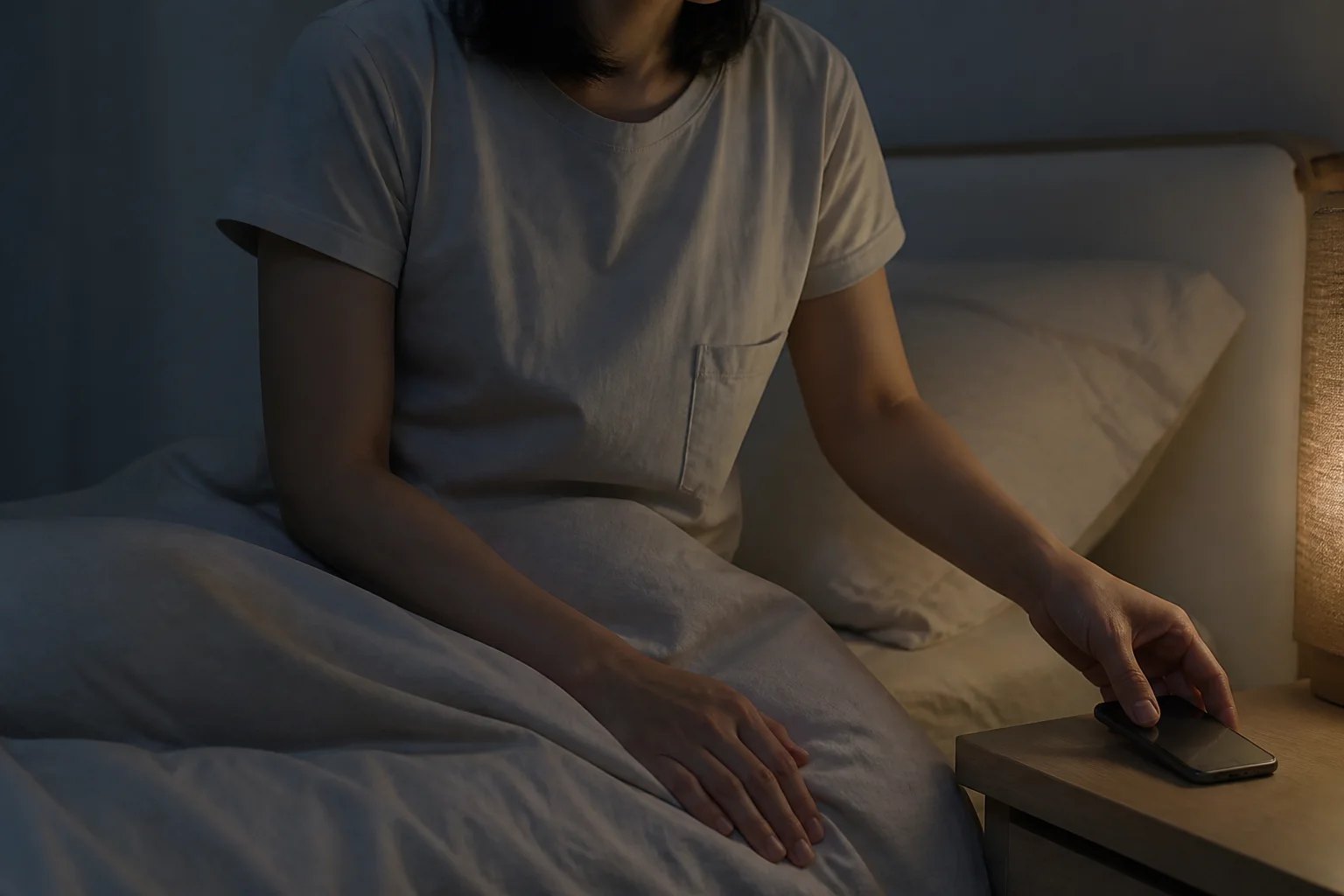
Rather than just the time spent unable to sleep, record the act of checking the clock, anxiety in bed, and the following day's functioning.
If you wake up too early, we look at your daily rhythm rather than just the night
If you wake up two to three hours earlier than desired and cannot fall back asleep, we examine whether your sleep rhythm has shifted forward, whether early morning anxiety and depression overlap, or whether your body no longer has the strength to maintain a long sleep. Seasons, age, and changes around menopause early awakeningcan also alter these patterns.
Avoiding morning sunlight and activity just because you woke up early can further blur your daily rhythm. Wake up at a set time to see the light, keep naps short, and avoid going to bed excessively early in the evening. Actual sleep recovery occurs when the next day's grogginess and motivation also improve.
Korean herbal medicine treatment handles the three different physical states of insomnia differently
We do not use the same Korean herbal medicine for someone whose heat rises to the chest and head before sleep, someone who wakes frequently with night sweats and throbbing, or someone who wakes in the early morning and lacks energy throughout the day. Baekrokdam identifies whether over-arousal of the mind and body, digestion and phlegm-fluid (dam-eum), or deficiency of yin-blood and energy is the primary factor disrupting the night.
The goal of Korean herbal medicine treatment is not simply to make you drowsy. The objective is to create a rhythm where arousal gently decreases at night, you can return to sleep if you wake up, and your head and body do not feel heavy in the morning. Acupuncture treatment can be used in parallel to reduce tension in the neck and chest, as well as throbbing and digestive discomfort.
If you are taking sleeping pills, do not arbitrarily reduce them just because you start Korean herbal medicine treatment. We will adjust the role of the treatment by reviewing the current medication's effect, any residual feelings the next day, and the reduction plan together.
Recovery is measured by whether day and night connect again, rather than a sleep score
Calculating exactly how many hours you slept every day can actually increase tension regarding sleep. Time taken to fall asleepIt is better to observe on a weekly basis whether this has generally decreased, whether it has become easier to fall back asleep after waking, and whether your morning physical state and daytime concentration are improving.
Among sleep onset, maintenance, and early awakening, it is common for the most difficult one to improve first, followed by changes in other patterns. Rather than trying to make every night perfect, through Korean herbal medicine treatment and sleep rhythm adjustment, we expand the capacity to recover the following day even after a bad night.
Difficulty falling asleep, waking frequently, and waking too early are different forms of insomnia. We determine the priority of Korean herbal medicine treatment by identifying at which point of the night arousal increases and the accompanying physical changes.
Evidence and Update Information
This content was organized by Korean medicine doctor Choi Yeon-seung based on the materials below and was updated on 2026-08-31.
- VA/DoD 2025: Chronic Insomnia Disorder and Obstructive Sleep ApneaAssessment and treatment of chronic insomnia and sleep apnea, and the CBT-I priority principle
- NHLBI: Circadian Rhythm DisordersPatterns and evaluation of misaligned sleep-wake cycles
- NINDS: Restless Legs SyndromeLeg discomfort that worsens at night and improves with movement, related diseases, and medical evaluation
- NICE NG215: Medicines associated with dependence or withdrawal symptomsGradual reduction of benzodiazepines, Z-drugs, antidepressants, etc., and principles of individual pacing and continuous observation
- FDA: Boxed warning for prescription insomnia medicinesComplex sleep behaviors and risk of injury associated with certain insomnia medications such as Zolpidem
- PubMed: Acupuncture for chronic insomnia disorder, 2025 systematic reviewReviews reporting improvements in subjective sleep indicators alongside the limitations of objective indicators and sample sizes
- Dongui Bogam Naegyeong-pyeon Volume 2: Original text comparison data for Dreams and Insomnia due to Deficiency-Heat (夢·虛煩不睡)Publicly available facsimile of original texts for verifying sections and contexts of traditional literature related to insomnia
- NIMH: Anxiety DisordersBasic explanations of generalized anxiety, panic, social anxiety, and difficulties experienced in daily life