Sleep Differentiation
When you don't feel refreshed after sleep and your bedtime keeps pushing back, how do snoring, restless legs, and sleep rhythms differ?
These three issues may overlap with insomnia, but the starting point for treatment is different. We check sleep tests, iron levels, and daily schedules in the necessary order; Korean herbal medicine and acupuncture treatment simultaneously address the body's conditions that hinder sleep recovery, such as nighttime hyperarousal, digestion, body heat, and energy levels.
While the phrase 'unable to sleep' may be the same, snoring and apnea refer to breathing after falling asleep, restless legs refer to sensations in the legs that arise when still, and a delayed sleep rhythmsleep rhythm refers to a state where the body's night is misaligned with the desired time.
| Type | Prominent Symptoms | Things to check before treatment |
|---|---|---|
| Sleep Apnea | Loud snoring, pauses in breathing, morning headaches, daytime sleepiness | Sleep study and the condition of the airway and breathing |
| Restless Legs Syndrome | Leg discomfort when still in the evening, which improves with movement | Iron levels, kidney function, pregnancy, and current medications |
| Delayed Sleep Rhythm | Sleeping more deeply when going to bed late and waking up late | Light exposure, wake-up time, and daily schedule |
| Insomnia | Difficulty falling asleep or staying asleep even when the opportunity is available | Accompanying symptoms such as anxiety, hyperarousal, and sleep habits |
Snoring may not be a problem with falling asleep, but rather a problem with breathing after falling asleep
Even with sleep apnea, you may feel as though you did not wake up during the night. A bed partner may notice pauses in breathing or gasping between loud snores, and symptoms such as a dry mouth, heavy head in the morning, and daytime sleepiness may be more apparent. This is why mentioning that you do not feel refreshed despite sufficient sleep is important.
Sleep apnea is not determined by weight and neck circumference alone. It can occur in thin people, and a definitive diagnosis cannot be made by snoring alone; therefore, after assessing symptoms and risks, a sleep study is conducted if necessary to check for respiratory depression and oxygen changes. In such cases, treatment to maintain an open airway at night takes priority over treatment to induce sleep.
The core of restless legs is the urge to move, rather than tired legs
Restless Legs SyndromeIt is not diagnosed by a single sensation of tingling or pulling in the legs. It involves four interlocking patterns: an urge to move the legs when lying down or sitting for long periods, worsening in the evening and at night, and temporary relief when walking or massaging. This is also why some people toss and turn every night just before falling asleep.
Iron deficiency, kidney disease, pregnancy, and certain medications can worsen restless legs. The underlying conditions must be addressed first, and the treatment differs from that of simple muscle pain or nocturnal leg cramps. For someone who can only fall asleep once the leg sensations subside, advice to simply increase sleep duration is insufficient.
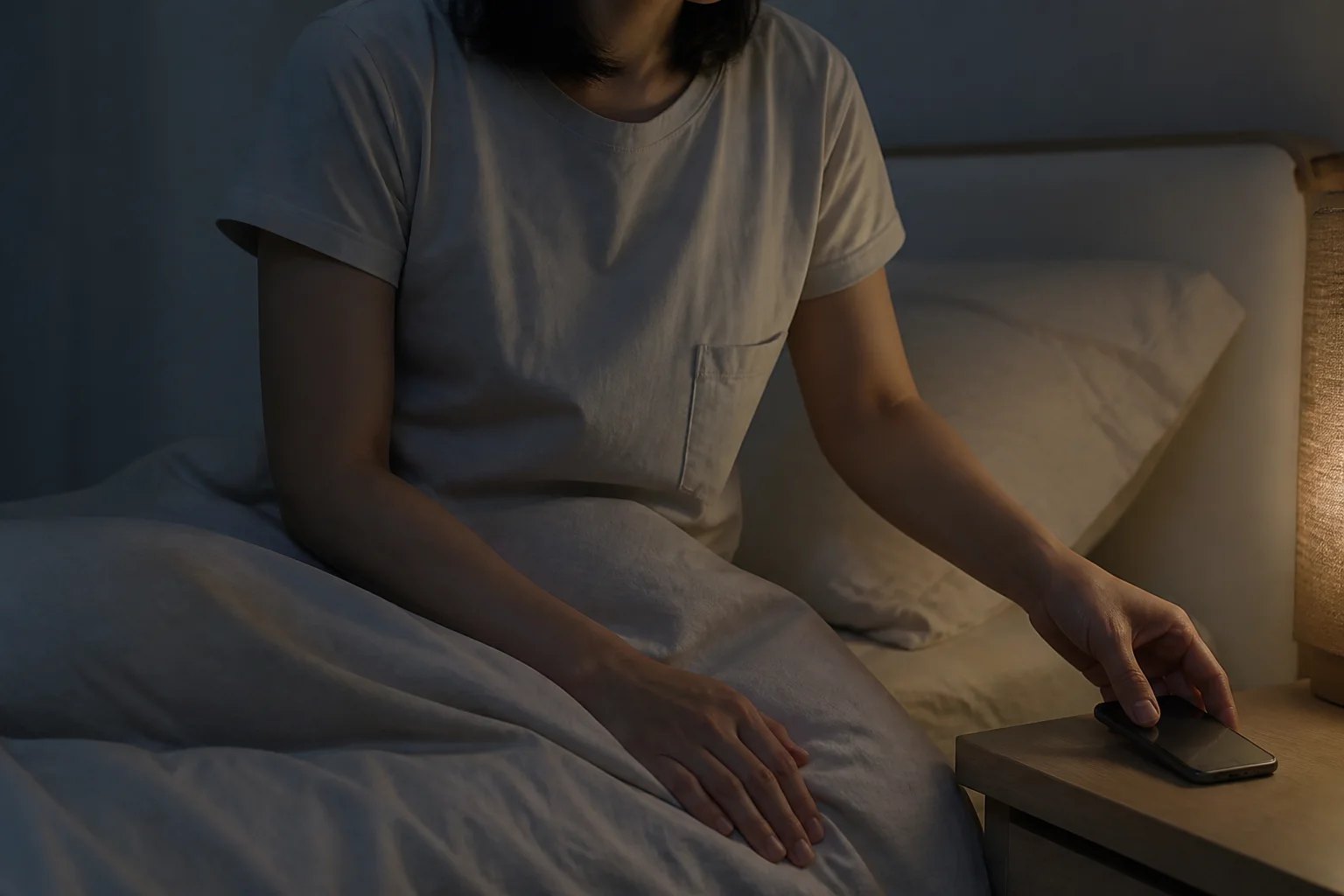
Rather than just the time spent unable to sleep, record the act of checking the clock, anxiety in bed, and the following day's functioning.
A delayed sleep rhythm is not an inability to sleep, but a state where the body's 'night' arrives late
If you naturally fall asleep around 2 or 3 AM but sleep relatively deeply and feel refreshed on days when you can wake up late, we consider the issue to be a shift in the sleep window rather than a lack of ability to generate sleep. On weekdays, forcing yourself to wake up early sleep deprivationleads to accumulated sleep debt, which is compensated for by sleeping in on weekends, creating a vicious cycle that further delays the rhythm.
In this case, rather than trying to lie down early through willpower alone, you must coordinate your wake-up time, morning light exposure, evening screen brightness, and the timing of meals and activities. Shifting the rhythm all at once can easily lead to a relapse after a few days, so it is moved in increments that the body can follow.
When these three issues overlap, we first treat the factor that most disrupts sleep
A person with severe snoring may have difficulty falling asleep due to leg discomfort, and weekday sleep may be short due to a delayed rhythm. Rather than choosing a single diagnosis, we must prioritize whether breathing is fragmenting sleep, whether leg sensations are blocking sleep onset, or whether the body's night is starting late.
Cause-specific treatments, such as sleep apnea therapy and iron supplementation, continue as planned. If, after these, your mind and chest still feel awake when going to bed, you wake up frequently due to chest tightness, heat sensations, or night sweats, or your morning energy does not return, the remaining hyperarousal and recovery of the body can be specifically addressed through Korean medicine treatment.
Korean herbal medicine and acupuncture aim to reduce nighttime arousal and restore morning recovery
If thoughts and pulsating sensations surge and heat rises to the face before sleep, we address the mind-body hyperarousalimbalance and heat. If nausea, chest tightness, and a heavy head overlap, we treat phlegm-fluid (dam-eum). For those who tire easily even with light activity, have a loss of appetite, and have shallow sleep, we reinforce the recovery of the spleen, stomach, and qi and blood. This is why we do not use a single prescription for the same reason of insomnia.
Acupuncture is used in parallel to reduce tension in the neck and chest, as well as excessive tension in the legs and body before sleep. The goal of Korean herbal medicine is not simply to induce long sleep. There must be a progression where nighttime arousal decreases, the head becomes clear in the morning, and you no longer need to rely on caffeine during the day.
The order of improvement differs for each of the three categories
For sleep apnea, daytime sleepiness and morning headaches may decrease before snoring does. For restless legs, the burden of falling asleep may lessen as the time when leg sensations emerge becomes later. A stabilizing sleep rhythm is indicated when oversleeping on holidays decreases and sleepiness begins to occur at the desired time.
Baekrokdam does not determine a response based on total sleep time alone. We observe whether respiratory treatment is well-maintained after falling asleep, whether the link between leg discomfort and arousal has weakened, and whether the rhythm between weekdays and weekends has converged, then shift the focus of the Korean herbal medicine prescription to the remaining discomforts.
If you do not feel refreshed after sleeping, you should not simply increase sleep time, but rather distinguish between respiration after falling asleep, leg sensations in the evening, and the body's sleep time zone. While continuing treatment for the cause, we use Korean herbal medicine and acupuncture to regulate nighttime hyperarousal, digestion, body heat, and energy to restore recovery by morning.
Evidence and Update Information
This content was organized by Korean medicine doctor Choi Yeon-seung based on the materials below and was updated on 2026-08-31.
- NHLBI: Sleep Apnea SymptomsNighttime and daytime symptoms of sleep apnea, such as snoring, witnessed apnea, morning headaches, and daytime sleepiness
- VA/DoD 2025: Chronic Insomnia Disorder and Obstructive Sleep ApneaAssessment and treatment of chronic insomnia and sleep apnea, and the CBT-I priority principle
- NHLBI: Circadian Rhythm DisordersPatterns and evaluation of misaligned sleep-wake cycles
- NINDS: Restless Legs SyndromeLeg discomfort that worsens at night and improves with movement, related diseases, and medical evaluation
- PubMed: Acupuncture for chronic insomnia disorder, 2025 systematic reviewReviews reporting improvements in subjective sleep indicators alongside the limitations of objective indicators and sample sizes