
Obsessive-Compulsive Disorder: Read in the order of your curiosity
Before the diagnosis alone explains all of your current difficulties
Obsessive-Compulsive Disorder: Checking the time spent on repetitive behaviors and the reduction in daily life
Obsessive-Compulsive Disorder involves unwanted obsessionsThis is a condition where repetitive behaviors or mental rituals used to reduce anxiety consume time and limit daily functioning. It is distinguished from simple meticulousness, and the role of exposure and response prevention therapy is clearly defined; Korean medicine treatment addresses accompanying burdens such as sleep, tension, and digestion. Rather than trying to eliminate thoughts completely, the goal is to continue professional treatment while reducing the time lost to repetitive behaviors and the burden on sleep. For cases involving thoughts of self-harm, impaired reality testing, nutritional or skin damage, or obsessions so severe that the patient cannot leave the house, treatment from a psychiatry department is prioritized.
Determine next steps
Obsessive-Compulsive Disorder: Symptoms to Check and Order of Care
Without rushing the patient to describe events in detail, we first examine current safety, recurring nightmares, startle responses, avoidance, and remaining physical tension.
| Current Situation | Items to Check Together | Next action |
|---|---|---|
| First occurrence, cause is unclear | Physical illnesses, medications, changes in sleep | Start with necessary evaluations |
| Long-term repetition, reduction in daily activities | Avoided activities, recovery time, response to treatment | Integrated care plan |
| Physical burden remains during existing treatment | Sleep, heart rate, digestion, energy levels | Consultation on concurrent treatment goals |
| Symptoms that suddenly worsen or require immediate assistance | For thoughts of self-harm, impaired reality testing, nutritional or skin damage, or compulsions so severe that leaving the house is impossible, psychiatric treatment takes priority. | Seek the relevant medical care immediately |
When to seek medical evaluation first
Do not wait; seek medical evaluation first for these symptoms
Even for familiar symptoms, if the following changes occur, prioritize the relevant medical evaluation over making inquiries.
- For thoughts of self-harm, impaired reality testing, nutritional or skin damage, or compulsions so severe that leaving the house is impossible, psychiatric treatment takes priority.
- Thoughts of self-harm or harming others, or specific plans to do so
- Seizures, changes in consciousness, hallucinations, or impaired reality judgment
- Inability to eat or drink, or a state where it is difficult to maintain safety while driving or working
Rather than the name of the disease, we look at the patient's daily life
A life where going to work or going to bed is delayed due to behaviors intended to eliminate anxiety by repeatedly checking things already verified
Exposure and Response Prevention (ERP) and psychiatric care are the primary focus. Korean herbal medicine treatment does not promise to eliminate obsessive thoughts, but is used concurrently to address insomnia, throbbing, digestion, body heat, and fatigue that make practice difficult.
Even if checking provides temporary relief, the time spent re-checking may increase
We look specifically at the time spent on repetitive behaviors and the resulting delays in work and sleep, rather than the content of the thoughts.
Reducing sleep and physical burdens that interfere with ERP
We perform pattern identification to see how throbbing, tension in the solar plexus, heat sensations, and fatigue change before and after practice.
Rather than promising peace of mind, we verify participation in treatment and daily living time
While maintaining professional treatment, we verify the time spent on repetitive behaviors and the functioning of sleep and work.
Treatment GoalsRather than trying to completely eliminate thoughts, we aim to reduce the time lost to repetitive behaviors and the burden on sleep while continuing professional treatment.
Consult about concurrent obsessive-compulsive disorder treatment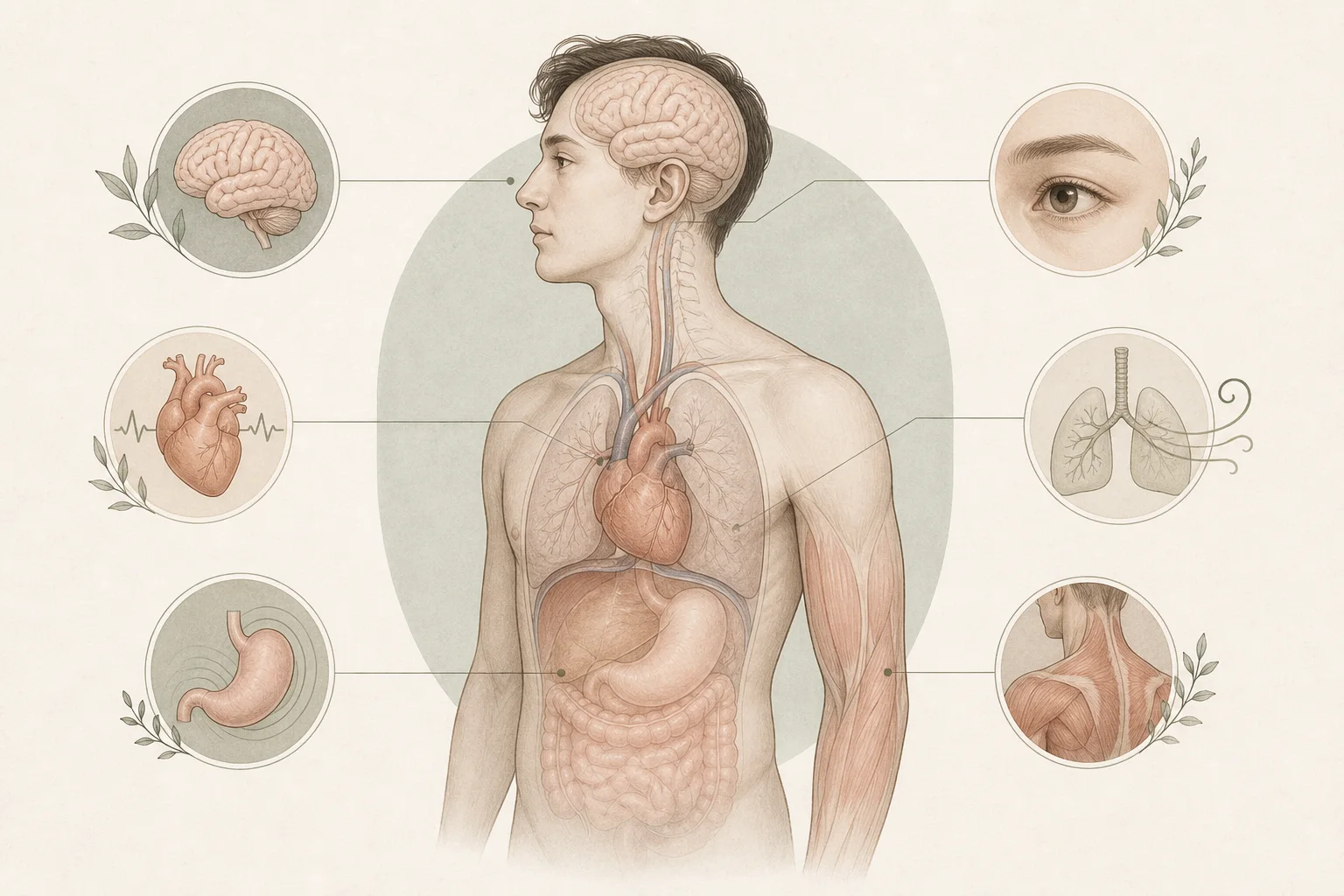
Hyperarousal is a physical response, but a single illustration is not used to diagnose all causes.
The photos show daily scenarios where concerns regarding sleep, anxiety, mood, and medication appear, and the explanatory illustrations show a simplified process of excessive body tension and recording methods. These do not represent an individual's diagnosis or treatment results.If you have these experiences
A life where commuting and bedtime are delayed due to behaviors intended to eliminate anxiety, such as re-checking things already verified
Some people blame themselves for being unable to stop their thoughts, even when commuting and bedtime are delayed because they re-check things already verified to eliminate anxiety. We strictly adhere to the core treatment for obsessive-compulsive disorder.
Those who lose much of their day to checking, washing, or asking repeatedly
Cases where much of the day is lost to checking, washing, or asking repeatedly
Those whose family life, work, or sleep are disrupted due to increasing behaviors to reduce anxiety
Cases where family life, work, or sleep are disrupted due to increasing behaviors to reduce anxiety
Those who wish to manage sleep and body tension while continuing ERP treatment
Cases where there is a desire to manage sleep and body tension while continuing ERP treatment
This is how we evaluate during medical evaluation
Obsessive-Compulsive Disorder: current difficulties remaining behind the diagnosis
Obsessive-Compulsive Disorder (OCD) is a disorder where unwanted obsessive thoughts and repetitive behaviors or mental rituals to reduce anxiety consume time and limit functioning. We distinguish this from simple meticulousness, clarify the role of exposure and response prevention therapy, and use Korean medicine treatment to manage accompanying burdens such as sleep, tension, and digestion. Rather than trying to completely eliminate thoughts, we continue professional treatment to reduce the time lost to repetitive behaviors and the burden on sleep. Thoughts of self-harm, impaired reality testing, nutritional or skin damage, or obsessions so severe that one cannot leave the house prioritize treatment by a psychiatry department.
Even if checking provides temporary reassurance, the time spent needing to re-check may increase
We look specifically at the time spent on repetitive behaviors and delays in commuting or going to bed, rather than the content of the thoughts.
Addressing sleep and physical strain that interfere with ERP
how throbbing, tension in the solar plexus, heat sensations, and fatigue fluctuate before and after practice Pattern Identificationis performed.
Confirming treatment participation and daily living time rather than promising reassurance
While maintaining professional treatment, we verify the time spent on repetitive behaviors and the functioning of sleep and work.
Reasons why recovery may be slow
Why OCD persists for a long time
Exposure and Response Prevention (ERP) and mental health care are the primary focuses. Herbal medicine treatment does not promise to eliminate obsessive thoughts; instead, it is used concurrently to manage insomnia, throbbing, digestion, body heat, and fatigue that make practice difficult.
Identify when the symptoms began
List the date the symptoms first appeared and any preceding changes in medication, illness, work, or relationships in chronological order.
Select the most challenging daily life scenarios
Choose one or two activities among sleep, commuting, travel, meals, or conversation that you have actually given up or been delayed in.
Verify recovery time
Record whether symptoms persist for several minutes, hours, or until the next day after they arise to quantify the burden of repetition.
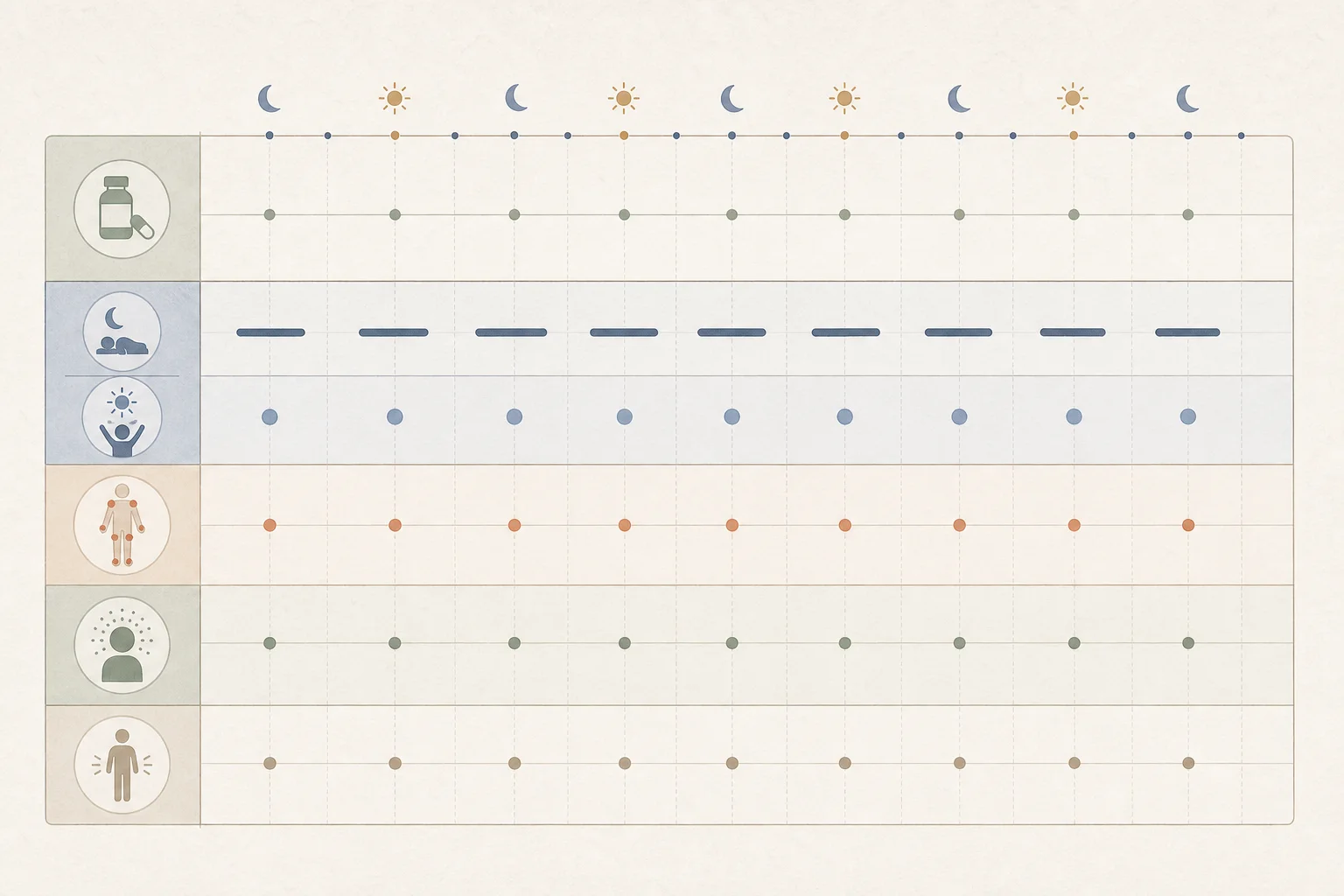
The prescriber determines the reduction schedule, and the log is used as a reference for discussion to distinguish between rebound effects, withdrawal, and recurrence of original symptoms.
Tests and daily records
Where current treatment and lifestyle records meet
Please provide the time spent on repetitive behaviors and your current ERP (Exposure and Response Prevention) and medication plans.
First, we examine risks and other causes that must be checked
Psychiatric treatment takes priority for suicidal ideation, impaired reality testing, nutritional or skin damage, and obsessions severe enough to prevent leaving the house.
Distinguishing between initial symptoms and long-lasting symptoms
Rather than detailed descriptions of events, record when nightmares, startle responses, avoidance, or repetitive behaviors occurred, and the extent to which sleep, heart rate, and digestion were affected.
Checking physical conditions that change together on the same day
Only the symptoms and patterns that repeatedly change together among chills/heat, sweating, appetite, bowel movements, dreams, and energy levels are reflected in the prescription.
Herbal medicine pattern identification for obsessive-compulsive disorder
Four changes observed in herbal medicine treatment for obsessive-compulsive disorder
Without rushing for details of the event, we observe the sequence of nightmares, startle responses, avoidance, repetitive behaviors, sleep, heart rate, and digestion. While maintaining professional treatment, the herbal medicine prescription is determined based on the remaining burden on the body.
When you are startled by small sounds and your body is in a constant state of readiness
We look for startle responses, increased heart rate, alertness before falling asleep, and nightmares. We ask about triggering sounds, places, smells, and the scope of avoidance before asking for event details. We support the recovery of sleep and physical alertness responses within a range that does not compromise safety.
When suppressed tension spreads to anger, heat sensations, or headaches
We check if irritability, facial flushing, and neck/shoulder tension persist after recalling the event. We identify the timing of worsening interpersonal conflict, sleep deprivation, and hyperarousalworsening. While continuing treatment for obsessions and trauma, we set herbal medicine treatment goals to reduce bodily overheating and sleep burden.
When appetite, sleep, and energy collapse together after enduring for a long time
We check if isolation increases after avoidance, and if appetite, concentration, and daytime activity decrease. We simultaneously check for anemia, thyroid issues, pain, medications, and worsening depression. While maintaining safety plans and professional treatment, we look for the recovery of daily rhythms and energy.
Changes to monitor during treatment
Returning to daily life before focusing on the number of symptoms
Rather than trying to completely eliminate thoughts, we reduce the time lost to repetitive behaviors and the burden on sleep while continuing professional treatment.
We look specifically at the time spent on repetitive behaviors and delays in commuting or sleep, rather than the content of the thoughts.
In the first consultation, this standard serves as the current starting point. Rather than trying to completely eliminate thoughts, we reduce the time lost to repetitive behaviors and the burden on sleep while continuing professional treatment.
Current diagnosis, testing, and psychotherapy stage, and a complete medication list including prescription drugs, over-the-counter drugs, and supplements
We adjust treatment priorities by comparing changes over several days rather than a single good day. Rather than trying to completely eliminate thoughts, we reduce the time lost to repetitive behaviors and the burden on sleep while continuing professional treatment.
We perform pattern identification (Byeonjeung) to see how throbbing, tension in the solar plexus, heat sensations, and fatigue shift before and after practice.
The direction of the next visit is determined based on the lifestyle the patient wishes to resume. Rather than trying to completely eliminate thoughts, we reduce the time lost to repetitive behaviors and the burden on sleep while continuing professional treatment.
At the crossroads of sleep, tension, digestion, and energy
Four changes observed in Korean herbal medicine treatment for obsessive-compulsive disorder
Without rushing the details of the event, we observe the sequence of nightmares, startle responses, avoidance, repetitive behaviors, and their connection to sleep, heart rate, and digestion. We determine the Korean herbal medicine prescription based on the remaining burden on the body while maintaining professional treatment.
Pattern identification (Byeonjeung) is not about assigning a constitution name to insomnia, anxiety, or depression. While maintaining the mental health diagnosis, psychotherapy, and the prescriber's medication plan, we select the axis that actually moves together among sleep, heart rate, digestion, body heat, and energy to adjust the priority of the Korean herbal medicine prescription.
When you are startled by small sounds and your body is in a constant state of alertness
- Changes observed in sleep and the body
- We observe startle responses, increased heart rate, alertness before falling asleep, and nightmares.
- Changes observed together in the body
- We ask about triggering sounds, places, smells, and the range of avoidance before asking about the details of the event.
- Prescription priority
- We support the recovery of sleep and physical alertness responses within a range that does not compromise safety.
When suppressed tension spreads to anger, heat sensations, or headaches
- Changes observed in sleep and the body
- We observe whether irritability, facial heat sensations, and neck and shoulder tension persist for a long time after recalling the event.
- Changes to monitor in the body
- We identify the timing of worsening interpersonal conflicts, sleep deprivation, and hyperarousal.
- Prescription priorities
- While continuing treatment for OCD and trauma, we set goals for Korean herbal medicine treatment to reduce bodily overheating and the burden on sleep.
When appetite, sleep, and energy collapse together after enduring for a long time
- Changes to monitor in sleep and the body
- We observe whether isolation increases following avoidance, and if appetite, concentration, and daytime activity decrease.
- Changes to monitor in the body
- We simultaneously check for anemia, thyroid issues, pain, current medications, and the worsening of depression.
- Prescription priorities
- While maintaining a safety plan and professional treatment, we monitor the recovery of daily rhythms and energy.
When recovery is not possible due to vivid dreams and sweating every night
- Changes to monitor in sleep and the body
- We observe nightmares, early morning awakening, throbbing, dry mouth, and bodily sensitivity.
- Changes to monitor in the body
- We check for menstruation, menopause, weight changes, and long-term sleep loss.
- Prescription priorities
- Rather than the content of the dreams, we track the time it takes to stabilize after waking and the next day's functioning.
Order of prescription adjustment
- First, we examine risks and other causes that must be checked
Psychiatric treatment is prioritized for suicidal ideation, impaired reality testing, nutritional or skin damage, and OCD severe enough to prevent leaving the house.
- Distinguish between initial symptoms and long-lasting symptoms
Rather than detailed descriptions of events, please record when nightmares, startle responses, avoidance, or repetitive behaviors appeared, and the extent to which sleep, heart rate, and digestion were simultaneously affected.
- We check for changes in your physical condition that occur together on the same day.
Only the symptoms and patterns that repeatedly change together among chills/heat, sweating, appetite, bowel movements, dreams, and energy levels are reflected in the prescription.
- When adjusting for daily functioning and combination safety
We simultaneously check for recovery in commuting, mobility, sleep, and eating, as well as drowsiness, dizziness, gastrointestinal reactions, and changes in medications.
Why consider Korean herbal medicine treatment now?
- When a significant portion of your day is taken up by checking, washing, or asking for reassurance
- When behaviors intended to reduce anxiety increase, affecting family, work, or sleep
- When you wish to manage sleep and physical tension while continuing ERP treatment
What is evaluated in Korean herbal medicine treatment for this condition
- We look specifically at the time spent on repetitive behaviors and delays in commuting or bedtime, rather than the content of the thoughts.
- Current diagnosis, test results, stage of psychotherapy, and a complete medication list including prescriptions, over-the-counter drugs, and supplements
- We perform pattern identification to see how throbbing, tension in the solar plexus, heat sensations, and fatigue shift before and after practice.
Actual intent and crisis risk are verified first
We distinguish between unwanted intrusive thoughts and actual intent or plans for self-harm or harm to others; in case of acute risk, we immediately connect you to emergency help.
Record the sequence of thoughts, anxiety, consciousness, and relief
We connect you to a professional evaluation by recording the triggering scenes, visible behaviors, internal consciousness, daily time spent, and tasks missed due to avoidance.
Maintain treatment for identified causes while monitoring changes in functioning
Without arbitrarily changing mental health treatments, Baekrokdam Korean herbal medicine treatment is discussed based on its specific goals while tracking changes in perception, avoidance, and sleep.
Things to prepare before the consultationBefore your medical consultation, please organize your repetitive thoughts and subsequent behaviors, internal consciousness, daily time spent, avoidance and functional impairment, current treatments, medications, and whether you have had suicidal thoughts.
Crisis intervention, CBT, ERP, trauma therapy, sleep studies, and the prescriber's dose reduction plan proceed in the necessary order. Korean herbal medicine treatment works alongside that plan to specifically target the remaining physical burdens, such as sleep, palpitations, digestion, and tension.
Consult about concurrent OCD treatmentSleep and Mind Glossary
Terms to Know Along with the OCD Guide
You can check the brief meaning first and then proceed to the detailed explanation.Frequently Asked Questions
Frequently Asked Questions About OCD
Is it also OCD if my day is delayed because I keep re-checking things I have already checked?
Some people blame themselves for being unable to stop their thoughts, even when their commute to work or bedtime is delayed due to behaviors intended to eliminate anxiety by re-checking things already verified. The core treatment for OCD must be strictly followed. We look specifically at the time spent on repetitive behaviors and the resulting delays in work or sleep, rather than the content of the thoughts.
How should I organize the time spent on repetitive behaviors and the ERP treatment stages before an OCD consultation?
Before the consultation, we look specifically at the time spent on repetitive behaviors and the resulting delays in work or sleep, rather than the content of the thoughts. Please organize the following in chronological order: current diagnosis/testing and psychotherapy stage, a complete medication list including prescriptions, over-the-counter drugs, and supplements, and the pattern of palpitations, solar plexus tension, heat sensations, and fatigue before and after practice based on the pattern identification (Byeon-jeung). This helps in establishing the starting point for medical evaluation. We focus on ERP and mental health care while checking for self-harm risks and medication. Korean herbal medicine is used concurrently to address burdens in sleep, heart rate, digestion, body heat, or energy that make it difficult to participate in treatment.
When can Korean herbal medicine treatment be considered for OCD?
Exposure and Response Prevention (ERP) and mental health care are the primary treatments. Korean herbal medicine treatment does not promise to eliminate obsessive thoughts; instead, it is used concurrently to manage burdens such as insomnia, palpitations, digestion, body heat, and energy that make practice difficult.
What factors change the prescription of Korean herbal medicine for OCD?
We perform pattern identification (Byeon-jeung) on how palpitations, solar plexus tension, heat sensations, and fatigue shift before and after practice. Without rushing into the details of events, we observe the sequence of nightmares, startle responses, avoidance, repetitive behaviors, sleep, heart rate, and digestion. While maintaining professional treatment, the Korean herbal medicine prescription is determined based on the remaining physical burdens.
Can I receive this along with treatment from a psychiatry clinic?
We will first ensure current safety and proceed with a specialized treatment plan for trauma and OCD. When combining this with herbal medicine treatment, we set one of the remaining physical burdens, such as nightmares, startle response, sleep, heart rate, or digestion, as the initial goal.
Can I reduce my current medications while taking herbal medicine?
Do not reduce mental health medications currently being taken without consulting the prescribing medical staff. Record the date of any medication changes and changes in nightmares, startle response, anxiety, or sleep, and share the same information with each medical provider.
What changes would make other medical evaluations a priority over counseling?
Psychiatric treatment takes priority in cases of suicidal ideation, impaired reality testing, nutritional or skin damage, or OCD severe enough to prevent leaving the house.
Evidence and Update Information
This content was compiled by Korean medicine doctor Choi Yeon-seung based on the official professional materials and disease-specific clinical data below, and was updated on 2026-08-26.
- NIMH: Post-Traumatic Stress DisorderSymptom clusters and treatment scope for re-experiencing, avoidance, arousal, and cognitive-mood changes
- NICE NG116: Post-traumatic stress disorderPTSD assessment, safety planning, and trauma-centered treatment principles
- NIMH: Obsessive-Compulsive DisorderObsessive thoughts, compulsive behaviors, and basic treatment pathways
- NIMH: Anxiety DisordersBasic explanations of generalized anxiety, panic, social anxiety, and difficulties experienced in daily life
- NIMH: DepressionEmotional, cognitive, and physical symptoms of depression and when to seek help
- VA/DoD 2025: Chronic Insomnia Disorder and Obstructive Sleep ApneaAssessment and treatment of chronic insomnia and sleep apnea, and the CBT-I priority principle
- NICE NG215: Medicines associated with dependence or withdrawal symptomsGradual reduction of benzodiazepines, Z-drugs, antidepressants, etc., and principles of individual pacing and continuous observation
- PubMed: Acupuncture for Anxiety, systematic review and meta-analysisA comprehensive review of acupuncture research for anxiety, including verification of research heterogeneity and application limits
- Royal College of Psychiatrists: Stopping antidepressantsDistinguishing antidepressant withdrawal symptoms from the recurrence of original symptoms, and reduction plans established with the prescriber