
Brain fog and decreased concentration: read in the order of your curiosity
Before the diagnosis alone explains all of your current difficulties
Brain fog: checking the point when concentration blurred, as well as sleep, medication, and fatigue
Brain fogBrain fog is not a single disease name, but an expression that groups experiences of blurred concentration, processing speed, and memory recall. We distinguish between lack of sleep, anxiety/depression, medication, anemia/thyroid issues, post-infection states, and neurological problems, and record function based on the duration of reading, conversation, and screen time. Rather than the intensity of the 'foggy' feeling, we focus on recovering the amount of time you can sustain reading, conversation, decision-making, and screen-based work. Sudden confusion, slurred speech, one-sided weakness, severe headache, or changes in consciousness are not treated as brain fog; do not wait.
Determine next steps
Brain fog and decreased concentration: symptoms to check now and the order of medical evaluation
Even if tests show no major abnormalities, we identify the limitations in daily life caused by brain fog. Sudden changes in consciousness, speech, or strength are evaluated separately and immediately.
| Current Situation | Items to Check Together | Next action |
|---|---|---|
| First occurrence, cause is unclear | Physical illnesses, medications, changes in sleep | Start with necessary evaluations |
| Long-term repetition, reduction in daily activities | Avoided activities, recovery time, response to treatment | Integrated care plan |
| Physical burden remains during existing treatment | Sleep, heart rate, digestion, energy levels | Consultation on concurrent treatment goals |
| Symptoms that suddenly worsen or require immediate assistance | Sudden confusion, slurred speech, one-sided weakness, severe headache, or changes in consciousness are not treated as brain fog; do not wait. | Seek the relevant medical care immediately |
When to seek medical evaluation first
Do not wait; seek medical evaluation first for these symptoms
Even for familiar symptoms, if the following changes occur, prioritize the relevant medical evaluation over making inquiries.
- Sudden confusion, slurred speech, one-sided weakness, severe headache, or changes in consciousness are not treated as brain fog; do not wait.
- Thoughts of self-harm or harming others, or specific plans to do so
- Seizures, changes in consciousness, hallucinations, or impaired reality judgment
- Inability to eat or drink, or a state where it is difficult to maintain safety while driving or working
Rather than the name of the disease, we look at the patient's daily life
A life where work is delayed because you cannot grasp the meaning even after reading text multiple times, or cannot recall words during conversation
We first check for new neurological symptoms and the influence of sleep, anemia, thyroid function, mood, and current medications. If the fogginess persists, we examine whether sleep, digestion, body heat, energy levels, and cognitive function fluctuate together Pattern Identificationto set the goals for herbal medicine treatment.
Simply saying "my head feels foggy" does not fully convey the discomfort
We specify what is blocked, whether it is reading, finding words, understanding meetings, or decision-making, and when during the day your mind is clearest.
Checking the connection between cognitive function and sleep, digestion, and energy
While maintaining tests and medication, we examine the changes in your physical condition that occur on days when the fogginess is severe from a Korean medicine perspective.
Identifying the time when the mind is clear and the duration of sustainable work
We compare the time spent continuing to read a page, converse, or perform screen-based work with the recovery experienced the following day.
Treatment GoalsWe focus on restoring the amount of time you can sustain reading, conversation, decision-making, and screen-based work, rather than just the intensity of the brain fog.
Consult about brain fog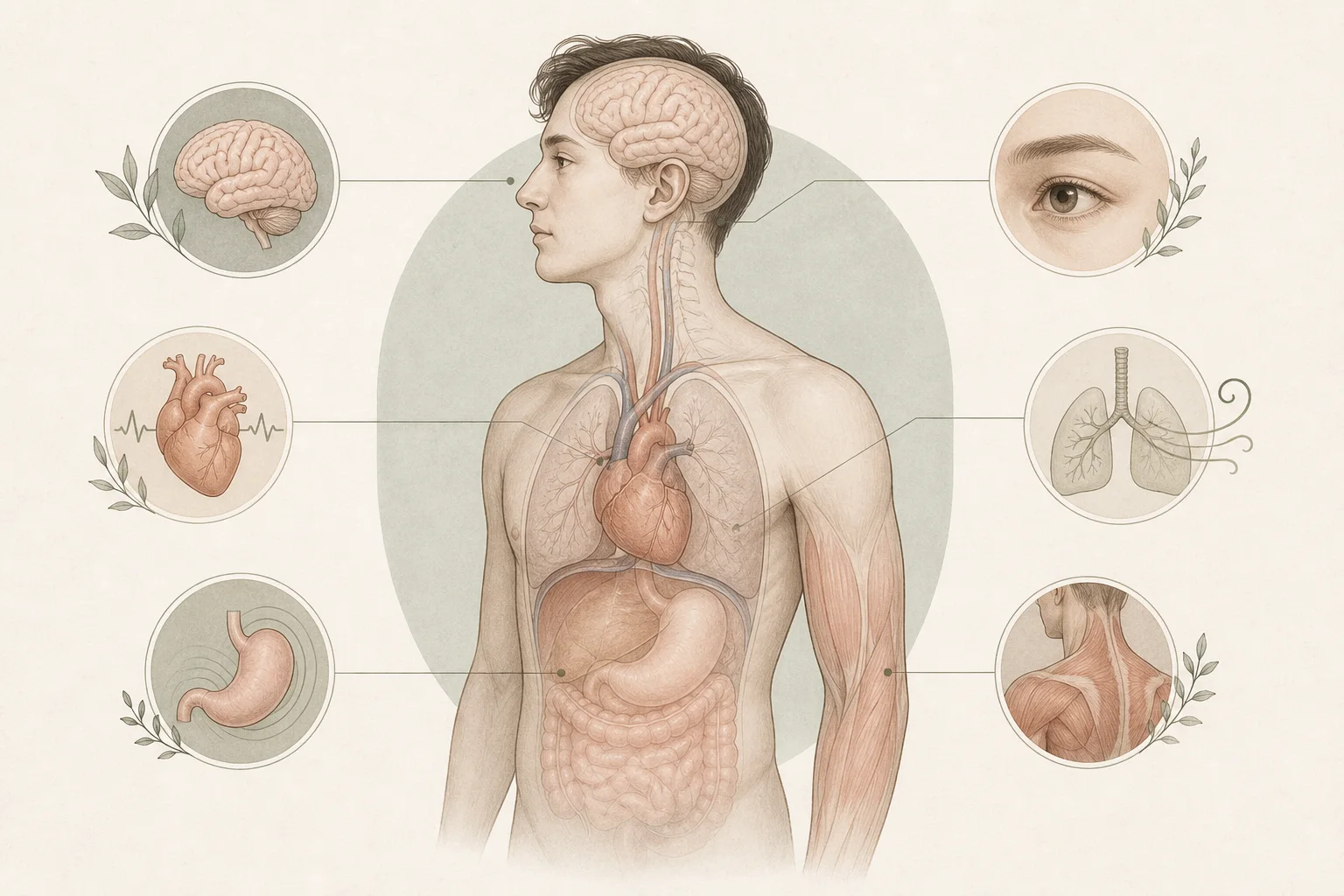
Hyperarousal is a physical response, but a single illustration is not used to diagnose all causes.
The photos show daily scenarios where concerns regarding sleep, anxiety, mood, and medication appear, and the explanatory illustrations show a simplified process of excessive body tension and recording methods. These do not represent an individual's diagnosis or treatment results.If you have these experiences
A life where work is delayed because you have to read text multiple times for it to sink in, or because you cannot recall words during a conversation.
Some people find they cannot work at their previous pace because they must read text multiple times or struggle to find words during conversations. We do not leave brain fog as a vague feeling, but instead categorize it by function and cause.
Those whose concentration has noticeably dropped following lack of sleep, infection, overwork, or changes in medication
Cases where concentration has noticeably dropped following lack of sleep, infection, overwork, or changes in medication
Those whose reading, memory, or decision-making speed has slowed down despite no major abnormalities in medical tests
Cases where reading, memory, or decision-making speed has slowed down despite no major abnormalities in medical tests
Those who experience recurring brain fog along with headaches, dizziness, indigestion, or decreased energy
Cases where brain fog recurs along with headaches, dizziness, indigestion, or decreased energy
This is how we evaluate during medical evaluation
Brain fog and decreased concentration: the current difficulties that remain after a diagnosis
Brain fog is not a single disease name, but an expression that groups experiences of blurred concentration, processing speed, and memory recall. We distinguish between sleep deprivation, anxiety, depression, medication, anemia, thyroid issues, post-infection states, and neurological problems, and record function based on the duration of reading, conversation, and screen time. The goal is to restore the time one can sustain reading, conversation, decision-making, and screen-based work, rather than focusing on the intensity of the cloudiness. Sudden confusion, slurred speech, one-sided weakness, severe headache, or changes in consciousness are not treated as brain fog.
Simply saying "my head feels foggy" does not fully convey the discomfort
We specify exactly what is blocked, whether it is reading, finding words, understanding meetings, or decision-making, and identify when during the day your mind feels clearest.
We check the connection between cognitive function and sleep, digestion, and energy levels
While maintaining your current tests and medications, we examine the changes in your physical condition on days when brain fog is severe from a Korean medicine perspective.
We identify the times when your mind is clear and the tasks you can sustain
We compare the duration you can sustain reading a page, conversing, or performing screen-based work with your recovery the following day.
Reasons why recovery may be slow
Brain fog and decreased concentration: why they persist
We first check for the influence of new neurological symptoms, sleep, anemia, thyroid issues, mood, or medications. If the brain fog persists, we perform a pattern identification (Byeonjeung) to see if sleep, digestion, body heat, and energy levels fluctuate with cognitive function to set the goal for Korean herbal medicine treatment.
Identify when the symptoms began
List the date the symptoms first appeared and any preceding changes in medication, illness, work, or relationships in chronological order.
Select the most challenging daily life scenarios
Choose one or two activities among sleep, commuting, travel, meals, or conversation that you have actually given up or been delayed in.
Verify recovery time
Record whether symptoms persist for several minutes, hours, or until the next day after they arise to quantify the burden of repetition.
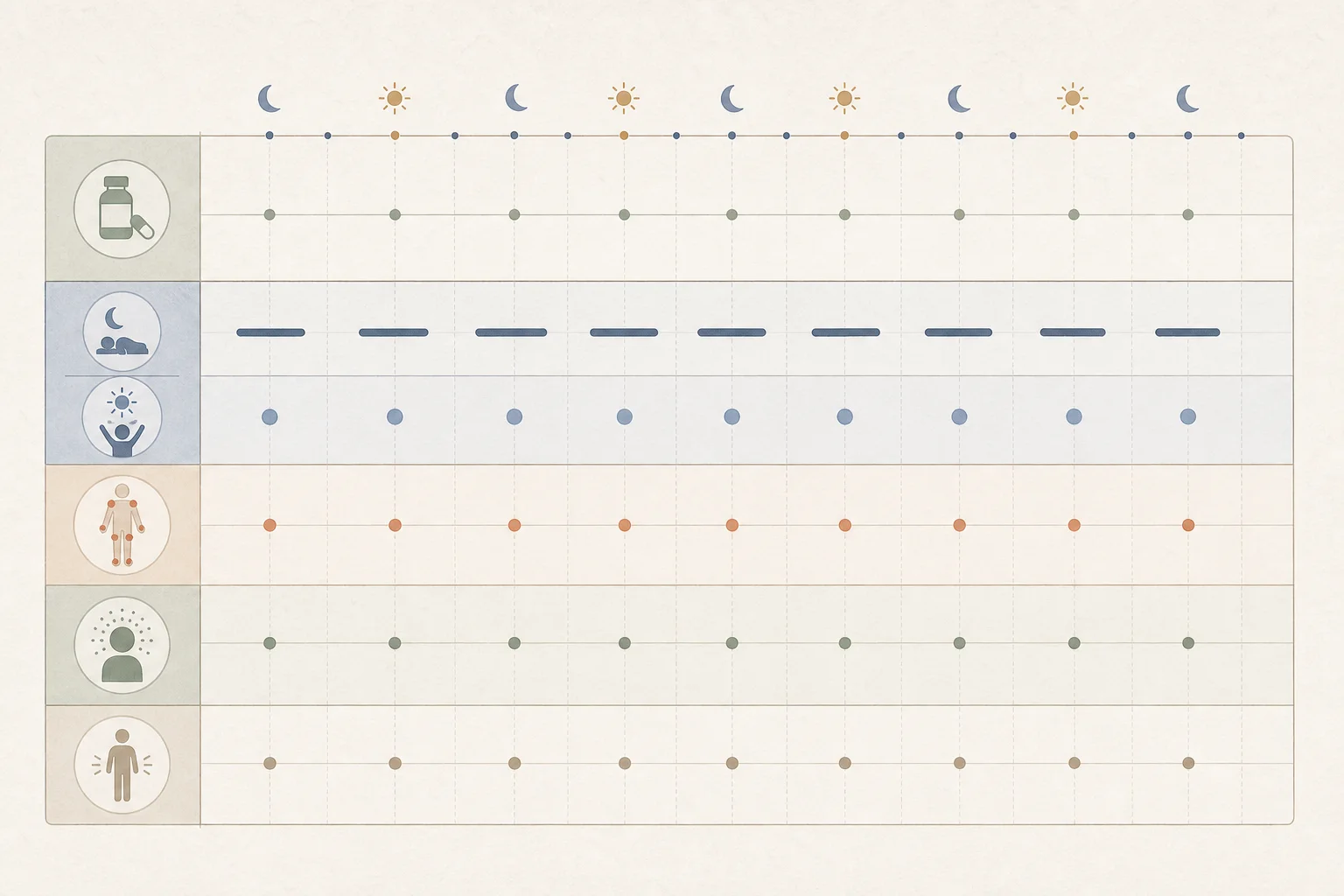
The prescriber determines the reduction schedule, and the log is used as a reference for discussion to distinguish between rebound effects, withdrawal, and recurrence of original symptoms.
Tests and daily records
Where current treatment and lifestyle records meet
Please let us know when your mind feels clearest and which tasks have become the most difficult.
First, we examine risks and other causes that must be checked
Sudden confusion, slurred speech, one-sided weakness, severe headache, or changes in consciousness are not brain fog; do not wait to seek care.
Distinguishing between initial symptoms and long-lasting symptoms
Please record the time the brain fog started, sleep duration, the amount of time spent reading documents or maintaining conversations, and the date any medications were changed.
Checking physical conditions that change together on the same day
Only the symptoms and patterns that repeatedly change together among chills/heat, sweating, appetite, bowel movements, dreams, and energy levels are reflected in the prescription.
Herbal Medicine Pattern Identification for Brain Fog and Poor Concentration
Four Changes Observed in Herbal Medicine Treatment for Brain Fog and Poor Concentration
Whether brain fog sleep deprivation is more severe after sleep deprivation, or if it occurred before mood changes associated with burnout or depression. Changes that actually occur alongside digestion and energy levels are reflected in the herbal medicine prescription.
When the chest feels blocked and motivation fades after sighing or irritability
We check if feelings of frustration, irritability, or a sensation of something stuck in the throat are more prominent than sadness. We ask if stressful situations coincide with changes in menstruation, digestion, or headaches. The focus is on reducing accumulated tension and avoidance of daily life rather than forcing an emotional lift.
When sleep, appetite, and energy levels drop together after prolonged overthinking or caregiving
We check for frequent waking, decreased food intake, brain fog, and becoming easily overwhelmed. We verify if changes in weight, menstruation, and digestion occurred together after childbirth, caregiving, or long-term overwork. The restoration of sleep, eating, and basic activities serves as the criteria for adjusting the prescription.
When the head feels heavy and the body feels sluggish, making it difficult to even start tasks
We examine whether brain fog, chest tightness, and nausea are accompanied by an increase in time spent lying down. We also check for decreased activity, late-night snacking, alcohol consumption, sedative medications, snoring, and daytime sleepiness. Rather than viewing it solely as a lack of concentration, we specifically examine the relationship between the duration of brain fog and sleep, medication, and fatigue.
Changes to monitor during treatment
Returning to daily life before focusing on the number of symptoms
Rather than the intensity of the brain fog, we focus on recovering the amount of time you can sustain reading, conversation, decision-making, and screen-based work.
We specify which areas are blocked, such as reading, finding words, understanding meetings, or decision-making, and at what time of day your mind feels clearest.
In the first consultation, these criteria serve as the current starting point. Rather than the intensity of the brain fog, we focus on recovering the amount of time you can sustain reading, conversation, decision-making, and screen-based work.
Current diagnosis, testing, and psychotherapy stage, and a complete medication list including prescription drugs, over-the-counter drugs, and supplements
We adjust treatment priorities by comparing changes over several days rather than relying on a single good day. Rather than the intensity of the brain fog, we focus on recovering the amount of time you can sustain reading, conversation, decision-making, and screen-based work.
While maintaining tests and medication, we examine the changes in your physical condition that occur on days when brain fog is severe from a Korean medicine perspective.
The direction of the next visit is determined based on the lifestyle the patient wishes to return to. Rather than the intensity of the brain fog, we focus on recovering the amount of time you can sustain reading, conversation, decision-making, and screen-based work.
At the crossroads of sleep, tension, digestion, and energy
Four Changes Observed in Herbal Medicine Treatment for Brain Fog and Poor Concentration
Whether brain fog is more severe after sleep deprivation, or if it occurred before burnout orDepressionmood changes. Changes that actually occur alongside digestion and energy levels are reflected in the herbal medicine prescription.
Pattern identification (Byeonjeung) is not about assigning a constitution name to insomnia, anxiety, or depression. While maintaining the mental health diagnosis, psychotherapy, and the prescriber's medication plan, we select the axis that actually moves together among sleep, heart rate, digestion, body heat, and energy to adjust the priority of the Korean herbal medicine prescription.
When the chest feels blocked and motivation fades after sighing or irritability
- Changes to monitor in sleep and the body
- We check if feelings of tightness, irritability, or a sensation of something stuck in the throat are more prominent than sadness.
- Changes to monitor in the body
- We ask if stressful events coincide with changes in menstruation, digestion, or headaches.
- Prescription priorities
- Rather than forcing an emotional lift, the focus is on reducing accumulated tension and the avoidance of daily activities.
When sleep, appetite, and energy levels drop together after prolonged overthinking or caregiving
- Changes to monitor in sleep and the body
- We check for frequent waking, decreased appetite, brain fog, and becoming easily overwhelmed.
- Changes to monitor in the body
- We verify if changes in weight, menstruation, and digestion occurred together following childbirth, caregiving, or long-term overwork.
- Prescription priorities
- The restoration of sleep, meals, and basic activities serves as the criterion for adjusting the prescription.
When the head feels heavy and the body feels sluggish, making it difficult to even start tasks
- Changes to monitor in sleep and the body
- We check for brain fog, chest tightness, nausea, and whether the time spent lying down has increased.
- Changes to monitor in the body
- We also look for decreased activity, late-night snacking, alcohol consumption, use of sedatives, snoring, and daytime sleepiness.
- Prescription priorities
- Rather than viewing it solely as a lack of concentration, we specifically examine the relationship between the duration of brain fog and sleep, medication, and fatigue.
When you feel exhausted yet sensitive, wake up in the early morning, and experience lingering heat
- Changes to monitor in sleep and the body
- We look for early morning awakening, night sweats, dry mouth, throbbing in the chest, and mood swings.
- Changes to monitor in the body
- We check for menopause, chronic pain, long-term stress, and changes in medications.
- Prescription priorities
- We work to reduce both the tension that persists through the night and the exhaustion felt during the day, while separately verifying any changes that suggest mania first.
Order of prescription adjustment
- First, we examine risks and other causes that must be checked
Sudden confusion, slurred speech, one-sided weakness, severe headache, or changes in consciousness are not treated as brain fog and require immediate attention.
- Distinguish between initial symptoms and long-lasting symptoms
Please record the time the brain fog began, sleep duration, the amount of time spent reading documents or maintaining conversations, and the date any medications were changed.
- We check for changes in your physical condition that occur together on the same day.
Only the symptoms and patterns that repeatedly change together among chills/heat, sweating, appetite, bowel movements, dreams, and energy levels are reflected in the prescription.
- When adjusting for daily functioning and combination safety
We simultaneously check for recovery in commuting, mobility, sleep, and eating, as well as drowsiness, dizziness, gastrointestinal reactions, and changes in medications.
Why consider Korean herbal medicine treatment now?
- Cases where concentration has noticeably declined following lack of sleep, infection, overwork, or changes in medication
- Cases where reading, memory, or decision-making speed has slowed down despite no significant abnormalities in medical tests
- Cases where brain fog recurs along with headaches, dizziness, indigestion, or decreased energy
What is evaluated in Korean herbal medicine treatment for this condition
- Specify which areas are blocked, such as reading, finding words, understanding meetings, or decision-making, and at what time of day your mind feels clearest.
- Current diagnosis, test results, stage of psychotherapy, and a complete medication list including prescriptions, over-the-counter drugs, and supplements
- While maintaining tests and medications, we examine changes in your physical condition on days when brain fog is severe from a Korean medicine perspective.
First, check for sudden confusion and newly appeared neurological symptoms
If the onset is sudden and accompanied by one-sided weakness, difficulty speaking, or changes in consciousness, we will connect you to immediate emergency help rather than a Korean herbal medicine consultation.
Specify changes in concentration, memory, and word-finding
Recording missed appointments, work errors, possible concentration time, and dates of sleep, infection, or medication changes helps distinguish the cause during standard medical evaluation.
Consult on recurring daily inconveniences after diagnosis
Without arbitrarily changing existing treatments, we observe weekly changes in fatigue, sleep, and concentration to explain the scope and limits of combining Korean herbal medicine treatment.
Things to prepare before the consultationPlease organize the date symptoms began, possible concentration time, actual work or appointment errors, sleep and recent infections, changes in medications, depression, anxiety, and physical examination results before the medical consultation.
Crisis intervention, CBT, ERP, trauma therapy, sleep studies, and the prescriber's dose reduction plan proceed in the necessary order. Korean herbal medicine treatment works alongside that plan to specifically target the remaining physical burdens, such as sleep, palpitations, digestion, and tension.
Consult about brain fogSleep and Mind Glossary
Additional information regarding brain fog and decreased concentration
You can check the brief meaning first and then proceed to the detailed explanation.Frequently Asked Questions
Frequently Asked Questions about brain fog and decreased concentration
My tests are normal, but I struggle to read text and cannot recall words. Is this something that can be treated?
Some people find that even after reading text multiple times, it does not sink in, or they cannot recall words during conversation, preventing them from working at their previous speed. Rather than leaving brain fog as a vague feeling, we categorize the function and the cause. Specify which areas are blocked, such as reading, finding words, understanding meetings, or decision-making, and at what time of day your mind feels clearest.
Do I need to record the times my head is clear and the tasks I struggle with before the brain fog consultation?
Before the consultation, specify which areas are blocked, such as reading, finding words, understanding meetings, or decision-making, and at what time of day your mind feels clearest. Please organize the following in chronological order: your current diagnosis, test and psychotherapy stages, a complete medication list including prescriptions, over-the-counter drugs, and supplements, and any changes in your physical condition on days when brain fog is severe while maintaining tests and medications, as viewed from a Korean medicine perspective. This helps establish the starting point for treatment. We first check for neurological, sleep, endocrine, or medication-related causes. Korean herbal medicine treatment narrows down the combination of sleep, digestion, body heat, and energy that fluctuates alongside reading, speaking, and decision-making.
When should I consider herbal medicine for brain fog and decreased concentration?
We first check for new neurological symptoms and the influence of sleep, anemia, thyroid function, mood, and current medications. If the feeling of cloudiness persists, we perform a pattern identification (Byeonjeung) to see if sleep, digestion, body heat, energy levels, and cognitive function are fluctuating together to set the goals for herbal medicine treatment.
What factors determine the herbal medicine prescription for brain fog and decreased concentration?
While maintaining your current tests and medications, we examine the changes in your physical condition that occur on days when the cloudiness is severe from a Korean medicine perspective. Rather than a single word describing mood, we look at the sequence of changes in sleep, appetite, concentration, digestion, and energy. We determine the direction of the herbal medicine prescription by selecting only the elements that actually fluctuate together on your good days and difficult days.
Can I receive this along with treatment from a psychiatry clinic?
We verify causes that can create cloudiness, such as anemia, thyroid issues, sleep disorders, and current medications, as much as necessary. In herbal medicine treatment, we observe the sleep, digestion, energy levels, and concentration duration that change along with the brain fog.
Can I reduce my current medications while taking herbal medicine?
Do not arbitrarily reduce or stop taking antidepressants or other mental health medications. Dosage reduction must be decided by the prescribing medical professional. Please inform the Korean medicine clinic of the date any medication was changed, as well as changes in mood, sleep, and physical condition.
What changes would make other medical evaluations a priority over counseling?
Sudden confusion, slurred speech, one-sided weakness, severe headache, or changes in consciousness should not be dismissed as brain fog.
Evidence and Update Information
This content was compiled by Korean medicine doctor Choi Yeon-seung based on the official professional materials and disease-specific clinical data below, and was updated on 2026-08-26.
- NIMH: DepressionEmotional, cognitive, and physical symptoms of depression and when to seek help
- NICE NG222: Depression in adultsPrinciples of gradual and proportional reduction when evaluating/treating depression and tapering antidepressants
- NIMH: Anxiety DisordersBasic explanations of generalized anxiety, panic, social anxiety, and difficulties experienced in daily life
- VA/DoD 2025: Chronic Insomnia Disorder and Obstructive Sleep ApneaAssessment and treatment of chronic insomnia and sleep apnea, and the CBT-I priority principle
- PubMed: Complementary and alternative medicine for depression, umbrella reviewReview of materials on complementary interventions for depression to verify differences in the level of evidence for each intervention
- Royal College of Psychiatrists: Stopping antidepressantsDistinguishing antidepressant withdrawal symptoms from the recurrence of original symptoms, and reduction plans established with the prescriber
- NICE NG215: Medicines associated with dependence or withdrawal symptomsGradual reduction of benzodiazepines, Z-drugs, antidepressants, etc., and principles of individual pacing and continuous observation
- NIMH: Post-Traumatic Stress DisorderSymptom clusters and treatment scope for re-experiencing, avoidance, arousal, and cognitive-mood changes