
Agoraphobia and avoidance of going out: Read in the order of your interest
Before the diagnosis alone explains all of your current difficulties
Agoraphobia: Checking the avoidance and range of movement that persist longer than the panic attacks
Agoraphobiais a pattern of avoiding movement not because of the size of a specific place, but due to the fear that it will be difficult to escape or receive help when having an attack or feeling distressed. It is distinguished from panic attacks, fear of social evaluation, and the risk of dizziness or fainting, and an actual avoidance map is created. Even if panic attacks decrease, if the distance one can travel alone and the dependence on a companion remain the same, the number of attacks and the mobility function are recorded separately to redefine the next treatment goal. If there is fainting, new neurological symptoms, severe chest pain, or an increased risk of self-harm, a medical safety evaluation takes priority over exposure practice.
Determine next steps
Agoraphobia and avoidance of going out: Symptoms to check now and the order of medical evaluation
Physical symptoms are not dismissed simply as 'anxiety'. We check the sequence in which heart palpitations, breathing, sweating, and gastrointestinal discomfort begin, as well as the resulting reduction in daily activities.
| Current Situation | Items to Check Together | Next action |
|---|---|---|
| First occurrence, cause is unclear | Physical illnesses, medications, changes in sleep | Start with necessary evaluations |
| Long-term repetition, reduction in daily activities | Avoided activities, recovery time, response to treatment | Integrated care plan |
| Physical burden remains during existing treatment | Sleep, heart rate, digestion, energy levels | Consultation on concurrent treatment goals |
| Symptoms that suddenly worsen or require immediate assistance | If there is fainting, new neurological symptoms, severe chest pain, or an increased risk of self-harm, a medical safety evaluation takes priority over exposure practice. | Seek the relevant medical care immediately |
When to seek medical evaluation first
Do not wait; seek medical evaluation first for these symptoms
Even for familiar symptoms, if the following changes occur, prioritize the relevant medical evaluation over making inquiries.
- If there is fainting, new neurological symptoms, severe chest pain, or an increased risk of self-harm, a medical safety evaluation takes priority over exposure practice.
- Thoughts of self-harm or harming others, or specific plans to do so
- Seizures, changes in consciousness, hallucinations, or impaired reality judgment
- Inability to eat or drink, or a state where it is difficult to maintain safety while driving or working
Rather than the name of the disease, we look at the patient's daily life
A life of avoiding going out alone and feeling heart palpitations just at the thought of it being difficult to leave a subway, elevator, or long line
Panic ·Social Anxiety·We first distinguish between the risk of fainting and dizziness, focusing on cognitive behavioral therapy and gradual exposure. Korean herbal medicine treatment is administered concurrently with the goal of reducing the burden on heart rate, respiration, digestion, and sleep, so that you can continue practicing going out and moving around.
Avoidance may reduce immediate fear, but it can further narrow your living radius
We check your current functional capacity by creating a map of distances you can manage alone and places where a companion is required.
We check your body's reactions and the burden of recovery rather than the location itself
We perform pattern identification to determine when throbbing, nausea, cold sweats, and lethargy begin before or after exposure and how long they persist.
We expand your body's capacity to endure professional treatment
Rather than waiting for days completely free of symptoms, we track the recovery time after completing a short, agreed-upon movement.
Treatment GoalsInstead of waiting only for symptom-free days, we gradually expand the sections you can navigate alone within the treatment plan.
Consult about avoidance of going out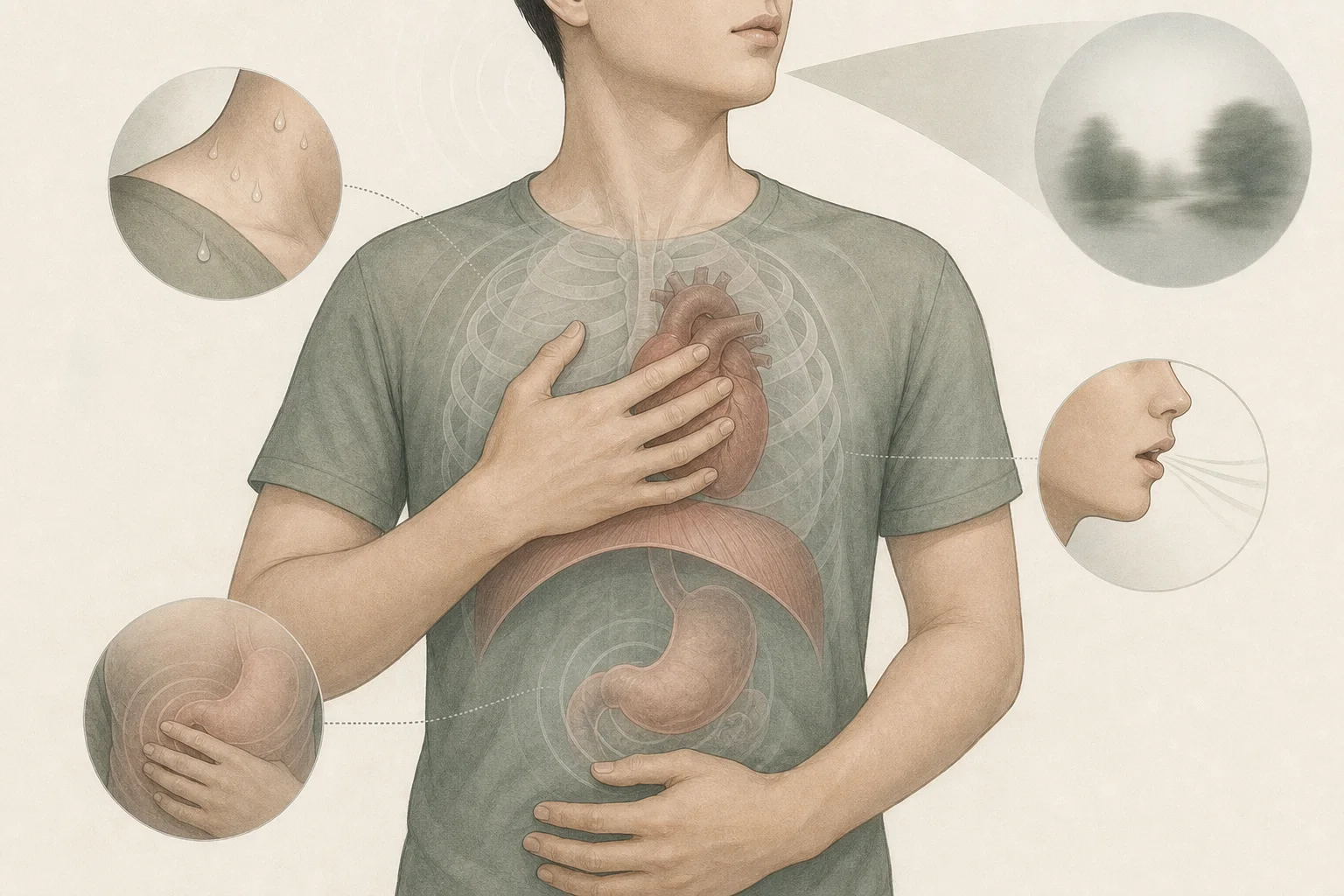
The physical symptoms felt during an attack are real. If new chest pain or fainting occurs, the causes related to the heart and respiratory system should be checked first.
The photos show daily scenarios where concerns regarding sleep, anxiety, mood, and medication appear, and the explanatory illustrations show a simplified process of excessive body tension and recording methods. These do not represent an individual's diagnosis or treatment results.If you have these experiences
A life of avoiding going out alone and feeling throbbing just at the thought of it being difficult to leave subways, elevators, or long lines
Some people continuously reduce the distance they travel alone because they fear symptoms will occur in places where it seems difficult to leave or get help. We address this within a safe treatment plan without blaming the avoidance.
Those who look for the exit first in subways, elevators, or long lines
Cases where one looks for the exit first in subways, elevators, or long lines
Those who find it difficult to visit hospitals, go grocery shopping, or commute to work without a family member
Cases where one finds it difficult to visit hospitals, go grocery shopping, or commute to work without a family member
Those who are aware of exposure therapy but find it difficult to attempt due to severe throbbing and nausea
Cases where one is aware of exposure therapy but finds it difficult to attempt due to severe throbbing and nausea
This is how we evaluate during medical evaluation
Agoraphobia and avoidance of going out: the current difficulties that remain behind the diagnosis
Agoraphobia is a pattern of avoiding movement not because of the size of a specific place, but due to the fear that it would be difficult to escape or receive help when having a panic attack or feeling distressed. Panic attack, social evaluation anxiety, and the risk of dizziness or fainting; we then create an actual avoidance map. Rather than waiting for days without symptoms, we gradually expand the areas where you can move alone within the treatment plan. If there is fainting, new neurological symptoms, severe chest pain, or an increased risk of self-harm, a medical safety evaluation takes priority over exposure practice.
Avoidance reduces immediate fear, but it can further narrow your living radius
We check your current functioning by creating a map of distances you can manage alone and places where you require a companion.
Check your body's reactions and the burden of recovery rather than the location
When throbbing, nausea, cold sweats, or lethargy start before or after exposure and how long they persist Pattern Identificationis performed.
Expand the body's capacity to endure professional treatment
Rather than waiting for days completely free of symptoms, we track the recovery time after completing a short, agreed-upon movement.
Reasons why recovery may be slow
Reasons why agoraphobia and avoidance of going out persist
We first distinguish between panic, social anxiety, the risk of fainting, and dizziness, placing cognitive behavioral therapy and gradual exposure at the center. Korean herbal medicine treatment is used concurrently with the goal of reducing the burden on heart rate, breathing, digestion, and sleep so that you can continue practicing going out and moving.
Identify when the symptoms began
List the date the symptoms first appeared and any preceding changes in medication, illness, work, or relationships in chronological order.
Select the most challenging daily life scenarios
Choose one or two activities among sleep, commuting, travel, meals, or conversation that you have actually given up or been delayed in.
Verify recovery time
Record whether symptoms persist for several minutes, hours, or until the next day after they arise to quantify the burden of repetition.
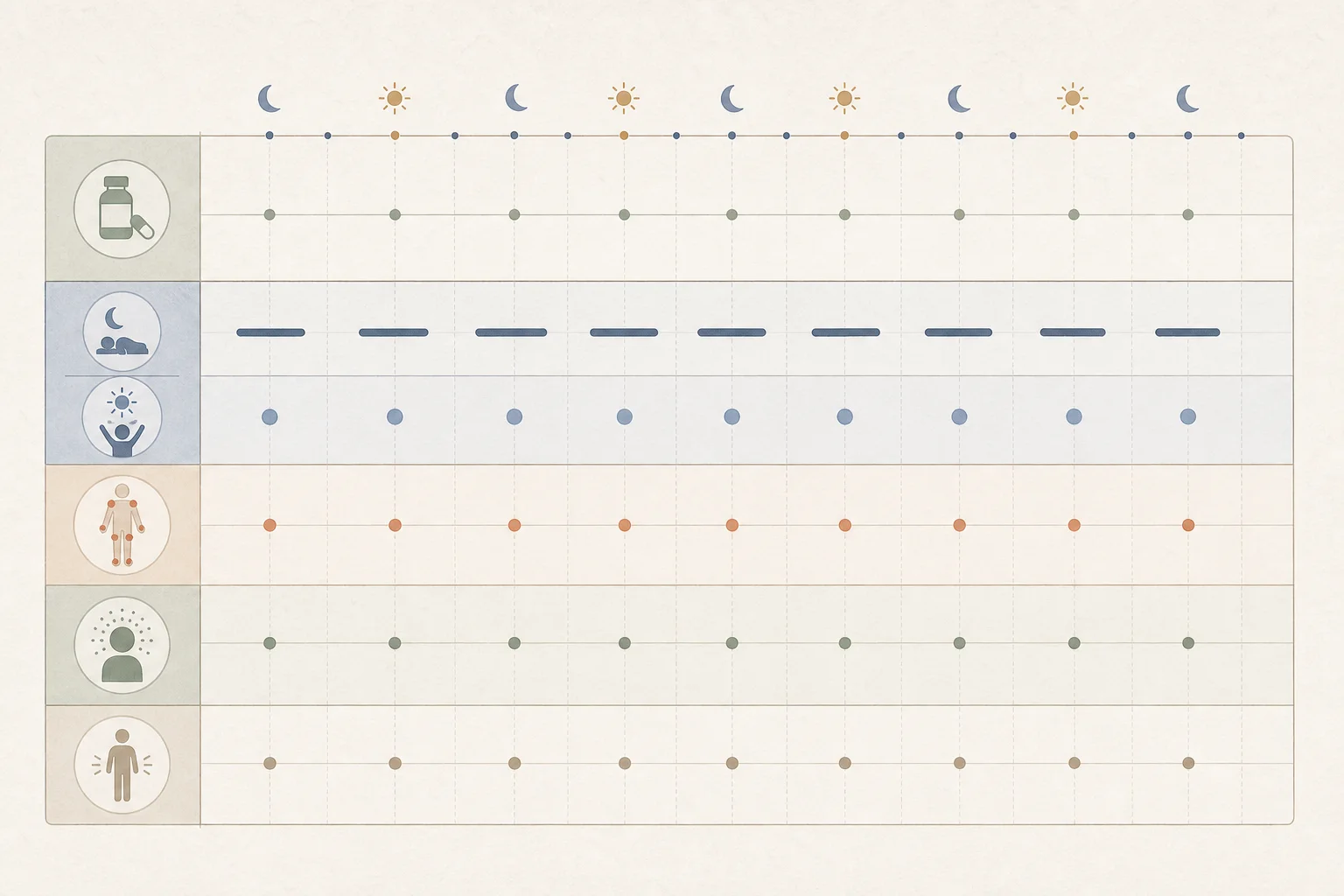
The prescriber determines the reduction schedule, and the log is used as a reference for discussion to distinguish between rebound effects, withdrawal, and recurrence of original symptoms.
Tests and daily records
Where current treatment and lifestyle records meet
Please tell us about the places you avoid and the range of movement you can currently manage alone.
First, we examine risks and other causes that must be checked
If there is fainting, new neurological symptoms, severe chest pain, or an increased risk of self-harm, a medical safety evaluation takes priority over exposure practice.
Distinguishing between initial symptoms and long-lasting symptoms
Write down the situation where anxiety began, the order in which throbbing, shortness of breath, and heat sensations occurred, the places you have come to avoid, and the time it takes to return to your original state.
Checking physical conditions that change together on the same day
Only the symptoms and patterns that repeatedly change together among chills/heat, sweating, appetite, bowel movements, dreams, and energy levels are reflected in the prescription.
Korean herbal medicine pattern identification for agoraphobia and avoidance of going out
Four changes observed in Korean herbal medicine treatment for agoraphobia and avoidance of going out
We look at the sequence of whether worry came first or whether throbbing, breathing, and heat sensations came first. Changes in sleep, digestion, sweat, or body heat that occur alongside attacks are reflected in the Korean herbal medicine prescription.
When you are easily startled by small physical sensations and wait for the next attack
We observe the moment when increased heart rate, changes in breathing, or dizziness are interpreted as dangerous symptoms. We ask if avoidance has increased along with being easily startled, hypervigilance before falling asleep, or sensitivity to sound. We monitor whether recovery time shortens and whether you can continue necessary actions even when the body's alarm system is triggered.
When suppressed tension surges as a feeling of oppression and heat
We check if feelings of blockage in the chest or throat, sighing, irritability, or facial heat increase after stressful scenes. We verify the temporal relationship between symptoms and menstruation, menopause, work conflicts, or lack of sleep. While reducing accumulated tension and upper-body heat, we track the range of conversations and movements that were previously avoided.
When prolonged worry leads to a decline in energy and digestion
We check if fatigue, loss of appetite, and decreased concentration accumulate before anxiety. We ask if throbbing, frequent waking during sleep, and post-meal lethargy worsen during the same period. Rather than focusing solely on eliminating anxiety, we work to recover sleep, eating, and work endurance simultaneously.
Changes to monitor during treatment
Returning to daily life before focusing on the number of symptoms
Rather than waiting for days without symptoms, we gradually expand the areas where you can move alone within the treatment plan.
We check your current functioning by creating a map of distances you can manage alone and places where you require a companion.
In the first consultation, this baseline is used as the current starting point. Rather than waiting for days without symptoms, we gradually expand the areas where you can move alone within the treatment plan.
Current diagnosis, testing, and psychotherapy stage, and a complete medication list including prescription drugs, over-the-counter drugs, and supplements
We adjust treatment priorities by comparing changes over several days rather than relying on a single good day. Rather than waiting for days without symptoms, we gradually expand the areas where you can move alone within the treatment plan.
We perform pattern identification on when throbbing, nausea, cold sweats, or lethargy start before or after exposure and how long they persist.
We determine the direction of future treatment based on the lifestyle the patient wishes to return to. Rather than simply waiting for symptom-free days, we gradually expand the areas where the patient can move independently within the treatment plan.
At the crossroads of sleep, tension, digestion, and energy
Four changes observed in Korean herbal medicine treatment for agoraphobia and avoidance of going out
We examine the sequence of whether anxiety came first or whether throbbing, breathing difficulties, or heat sensations came first. Changes in sleep, digestion, sweating, or body heat that occur alongside attacks are reflected in the Korean herbal medicine prescription.
Pattern identification (Byeonjeung) is not about assigning a constitution name to insomnia, anxiety, or depression. While maintaining the mental health diagnosis, psychotherapy, and the prescriber's medication plan, we select the axis that actually moves together among sleep, heart rate, digestion, body heat, and energy to adjust the priority of the Korean herbal medicine prescription.
When you are easily startled by small physical sensations and wait for the next attack
- Changes to monitor in sleep and the body
- We observe the moments when an increased heart rate, changes in breathing, or dizziness are interpreted as dangerous symptoms.
- Changes to monitor in the body
- We ask if there has been an increase in being easily startled, hypervigilance before falling asleep, sensitivity to sound, and avoidance behavior.
- Prescription priorities
- We observe whether the recovery time shortens and whether you can continue necessary activities even when the body's alarm is triggered.
When suppressed tension surges as a feeling of oppression and heat
- Changes to monitor in sleep and the body
- We observe whether a feeling of blockage in the chest and neck, sighing, irritability, and facial flushing increase following stressful situations.
- Changes to monitor in the body
- We check the relationship between the timing of symptoms and factors such as menstruation, menopause, workplace conflict, and lack of sleep.
- Prescription priorities
- While reducing muscle tension and upper body heat, we track the range of conversations or movements that have been avoided.
When prolonged worry leads to a decline in energy and digestion
- Changes to monitor in sleep and the body
- We observe whether fatigue, loss of appetite, and decreased concentration accumulate before anxiety occurs.
- Changes to monitor in the body
- We ask if throbbing, frequent waking during sleep, and post-meal lethargy worsen during the same period.
- Prescription priorities
- Rather than focusing solely on the goal of eliminating anxiety, we work to restore sleep, eating habits, and the duration of work capacity together.
When nausea and brain fog further intensify anxiety
- Changes to monitor in sleep and the body
- We check if chest tightness, nausea, dizziness, and frequent dreaming are linked to caffeine, late-night snacks, or alcohol consumption.
- Changes to monitor in the body
- We verify the timing of medications and supplements relative to meals, as well as gastrointestinal symptoms occurring before an attack.
- Prescription priorities
- We regulate both gastrointestinal and arousal responses, but first rule out possibilities related to the heart, thyroid, or hypoglycemia.
Order of prescription adjustment
- First, we examine risks and other causes that must be checked
If there is fainting, new neurological symptoms, severe chest pain, or an increased risk of self-harm, a medical safety evaluation takes priority over exposure practice.
- Distinguish between initial symptoms and long-lasting symptoms
Record the situations where anxiety began, the order in which throbbing, shortness of breath, and heat sensations occurred, the places avoided, and the time it takes to return to a normal state.
- We check for changes in your physical condition that occur together on the same day.
Only the symptoms and patterns that repeatedly change together among chills/heat, sweating, appetite, bowel movements, dreams, and energy levels are reflected in the prescription.
- When adjusting for daily functioning and combination safety
We simultaneously check for recovery in commuting, mobility, sleep, and eating, as well as drowsiness, dizziness, gastrointestinal reactions, and changes in medications.
Why consider Korean herbal medicine treatment now?
- Looking for exits first in subways, elevators, or long lines
- Difficulty visiting hospitals, grocery shopping, or commuting to work without a family member
- Knowing about exposure therapy but finding it difficult to attempt due to intense throbbing or nausea
What is evaluated in Korean herbal medicine treatment for this condition
- We check current functioning by creating a map of distances possible to travel alone and places where a companion is required.
- Current diagnosis, test results, stage of psychotherapy, and a complete medication list including prescriptions, over-the-counter drugs, and supplements
- We perform pattern identification to determine when throbbing, nausea, cold sweats, and lethargy begin before or after exposure and how long they persist.
Risk of self-harm and new physical symptoms are checked first
If there are specific plans for self-harm or new chest pain, fainting, or paralysis, do not dismiss them as familiar symptoms of fear; prioritize immediate safety and evaluation.
Distinguishing between panic, difficulty escaping, and dependence on a companion
We specifically verify physical reactions and thoughts before and after entering a location, whether the patient avoids, endures, or leaves midway, and safety conditions such as a companion or an exit.
Verifying the distance traveled alone and the activities resumed
We record changes through the time spent grocery shopping, commuting to work or school, using public transportation, and daily activities performed without cancellation.
Things to prepare before the consultationPlease prepare information regarding feared locations and physical reactions, avoidance, endurance, or leaving midway, required companions or exit conditions, the distance traveled outside the home, and whether there are thoughts of self-harm.
Crisis intervention, CBT, ERP, trauma therapy, sleep studies, and the prescriber's dose reduction plan proceed in the necessary order. Korean herbal medicine treatment works alongside that plan to specifically target the remaining physical burdens, such as sleep, palpitations, digestion, and tension.
Consult about avoidance of going outSleep and Mind Glossary
Additional information to know regarding agoraphobia and avoidance of going out
You can check the brief meaning first and then proceed to the detailed explanation.Frequently Asked Questions
Frequently Asked Questions about Agoraphobia and Avoidance of Going Out
Does it count as agoraphobia if I can go out with family but cannot go out alone?
Some people continuously reduce the distance they travel alone because they fear symptoms may occur in places where it feels difficult to leave or get help. We address this within a safe treatment plan without blaming the avoidance. We create a map of distances you can manage alone and places where you need a companion to verify your current functional level.
If panic attacks have decreased but the distance I can travel alone and my dependence on a companion remain the same, what else should I ask about?
Recovery is not judged by the number of attacks alone. Please record the distance you can manage alone, places where you need a companion, and the time you stayed and recovered after anxiety rose. We also observe whether basic functions such as sleep, meals, and commuting are returning, and discuss during the consultation which avoidance behaviors to address next while maintaining current progress. If fainting, new neurological symptoms, or severe chest pain occur, a medical safety evaluation takes priority over adjusting avoidance behaviors.
How should I organize my current mobility range before a consultation for avoidance of going out?
Before the consultation, we verify current function by creating a map of distances you can manage alone and places where you need a companion. Please organize the following in chronological order: your current diagnosis, tests, and psychotherapy stage; a complete medication list including prescriptions, over-the-counter drugs, and supplements; and the details of your pattern identification (Byeonjeung) regarding when throbbing, nausea, cold sweats, and lethargy start and how long they last before and after exposure. This helps establish the starting point for treatment. We first check for fainting and physical risks before maintaining the panic and exposure therapy plan. In Korean herbal medicine treatment, we perform pattern identification on heart rate, breathing, digestion, and body heat before and after going out, as well as the following day, exhaustionand provide treatment in parallel.
When can Korean herbal medicine treatment be considered for agoraphobia and avoidance of going out?
We first distinguish between panic, social anxiety, risk of fainting, and dizziness, placing cognitive behavioral therapy and gradual exposure at the center. Korean herbal medicine treatment is used in parallel with the goal of reducing the burden on heart rate, breathing, digestion, and sleep so that you can continue practicing going out and moving around.
What factors determine the Korean herbal medicine prescription for agoraphobia and avoidance of going out?
We perform pattern identification to see when throbbing, nausea, cold sweats, and lethargy start and how long they last before and after exposure. We look at the sequence, whether worry came first, or whether throbbing, breathing, or heat sensations came first. Changes in sleep, digestion, sweat, or body heat that occur alongside attacks are reflected in the Korean herbal medicine prescription.
Can I receive this along with treatment from a psychiatry clinic?
Maintain necessary evaluations for the heart, thyroid, hypoglycemia, etc., and mental health treatment. Korean herbal medicine treatment is provided in parallel by determining the most burdensome physical symptoms currently experienced among throbbing, breathing, sweat, gastrointestinal discomfort, and sleep.
Can I reduce my current medications while taking herbal medicine?
If you are taking anti-anxiety medication, antidepressants, or sleeping pills, do not reduce the dosage on your own. Consult the prescribing medical staff regarding dosage reduction, and record and share attacks, avoidance, and bodily changes on the same date.
What changes would make other medical evaluations a priority over counseling?
If there is fainting, new neurological symptoms, severe chest pain, or an increased risk of self-harm, a medical safety evaluation takes priority over exposure practice.
Evidence and Update Information
This content was organized by Korean medicine doctor Choi Yeon-seung based on official professional materials and disease-specific clinical data, and was updated on 2026-09-03.
- NIMH: Anxiety DisordersBasic explanations of generalized anxiety, panic, social anxiety, and difficulties experienced in daily life
- WHO: Anxiety disordersPhysical, cognitive, and behavioral symptoms of anxiety disorders, daily difficulties, and the role of psychotherapy
- NIMH: Panic Disorder: What You Need to KnowPhysical symptoms of panic attacks, avoidance, and comorbid conditions
- NICE CG113: Generalised anxiety disorder and panic disorderStep-by-step evaluation of generalized anxiety and panic, and recommendations for psychological and pharmacological treatment
- NICE CG159: Social anxiety disorderEvaluation of social anxiety and treatment principles centered on cognitive behavioral therapy
- VA/DoD 2025: Chronic Insomnia Disorder and Obstructive Sleep ApneaAssessment and treatment of chronic insomnia and sleep apnea, and the CBT-I priority principle
- PubMed: Acupuncture for Anxiety, systematic review and meta-analysisA comprehensive review of acupuncture research for anxiety, including verification of research heterogeneity and application limits
- NICE NG215: Medicines associated with dependence or withdrawal symptomsGradual reduction of benzodiazepines, Z-drugs, antidepressants, etc., and principles of individual pacing and continuous observation
- NIMH: DepressionEmotional, cognitive, and physical symptoms of depression and when to seek help